


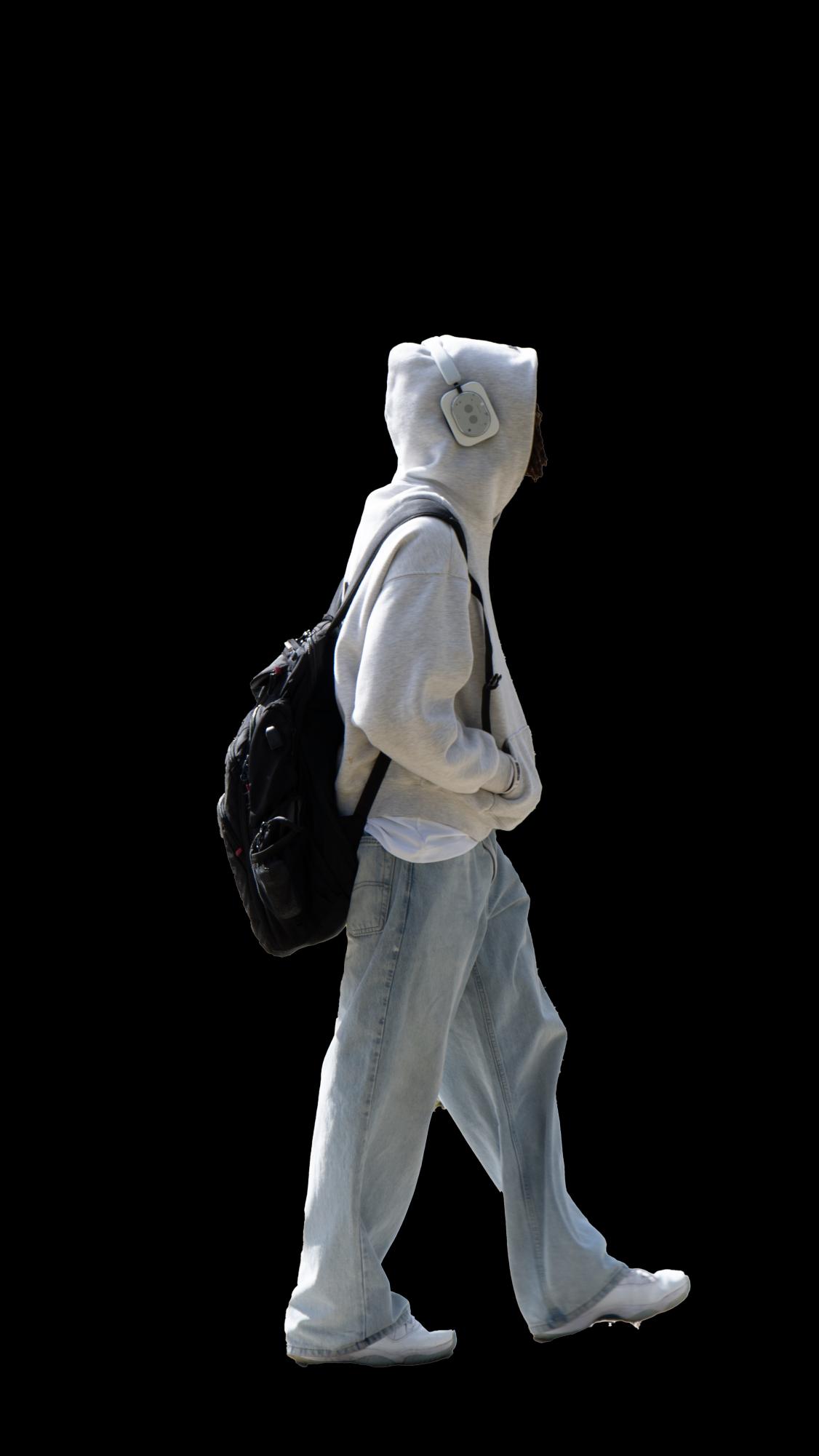
Holding up four fingers instead of a smile. A head nod instead of a “yes.” A shrug instead of an answer. All symptoms of the current, most common disease in high school — the nonchalance epidemic. It has hit schools all across the world, one of its targets including Trinity Prep, silently infiltrating the minds and bodies of their preferred host.
“It’s been going on since the start of high school or the end of middle school, when guys figured out they have some kind of status or persona they need to upkeep,” senior Marisela Morel said.
While this virus could affect anyone, it is commonly found in high school boys.
“(There is) a standard as a guy that if you’re not a certain way, it’s weird,” sophomore Sina Gooshvar said. “The basis of not being weird is being nonchalant.”
Nonchalance, at its core, is a performance of detachment. Caring too much shows vulnerability, effort and real excitement, all embarrassing things in high school.
“I think it protects them from rejection,” Morel said. “They (act) barely interested, so it protects them from seeming sad if they were to get rejected.”
There has been speculation as to why Gen Z is the most susceptible to the nonchalance epidemic: a completely different (and 100% more fatal) epidemic that hit in 2019.
“COVID-19 has changed this generation, compared to older Gen Z,” Gooshvar said.
When COVID-19 hit, most of the current teenage population were still in late elementary school or early middle school, ages when they were still trying to discover who they are as people. Quarantine came swiftly and did not allow for real connection with peers, unless it was through a Zoom call with your entire sixth-grade class. During this period meant for social development, kids were locked behind screens, cameras off and microphones muted. Over time, conversations became optional or even unnecessary.
“If you’re quieter, you don’t have to say as much,” sophomore Henry Greenlee said. “You just let other people do the talking. It’s a little easier to do. Less thinking.”
The habits picked up over quarantine did not dissipate when classrooms reopened. In fact, they lingered, leaving students with long-term side effects: short attention spans, emotional withdrawal and detachment from society. Nonchalance flourished in this environment, offering an easy way to mask discomfort instead of confronting it head-on. It took over quickly, infiltrating the way students speak and connect, until emotional distance felt more normal than sincerity.
It is not rare for people to be afraid of being persecuted in social settings, but it is not rational to diminish or change components of yourself to fit a false persona. Social media allowed nonchalance to appear as an attractive character trait for people to have.
“With social media, everyone always sees the most perfect versions of a person, and they aspire to be like them, even though that may not be achievable,” Gooshvar said.
On online platforms, perfection is rarely seen as being emotional. Being your true, unashamed self on the internet can often be received with hate and controversy, so most choose to avoid it. For example, phrases such as “aura-farming” became a synonym of nonchalance, and doing or being anything else was seen as inferior. While most trends go away with time, this one never truly left; it simply faded until the resurgence in 2025.
“I see stuff on TikTok (where people) all talk about how being nonchalant is cool,” Greenlee said. “Nowadays, people kind of see stuff on TikTok and immediately treat it like fact. It’s really easy to influence people through social media.”
Many people try to conform to the internet’s image of an ideal life, failing to realize that it is simply not attainable — especially if the image is one of constant indifference.
“You should always be your true self,” junior Nabiha Shakil said. “If you don’t show your (true) personality, how are people going to want to be friends with you?”
Allowing false perceptions of perfect, emotionally detached people to influence your own behavior will lead to a life of misunderstanding who you are as a person. If nonchalance is the disease, authenticity is the cure. Recovery does not require dramatic emotional reveals or constant enthusiasm, but it does require honesty.