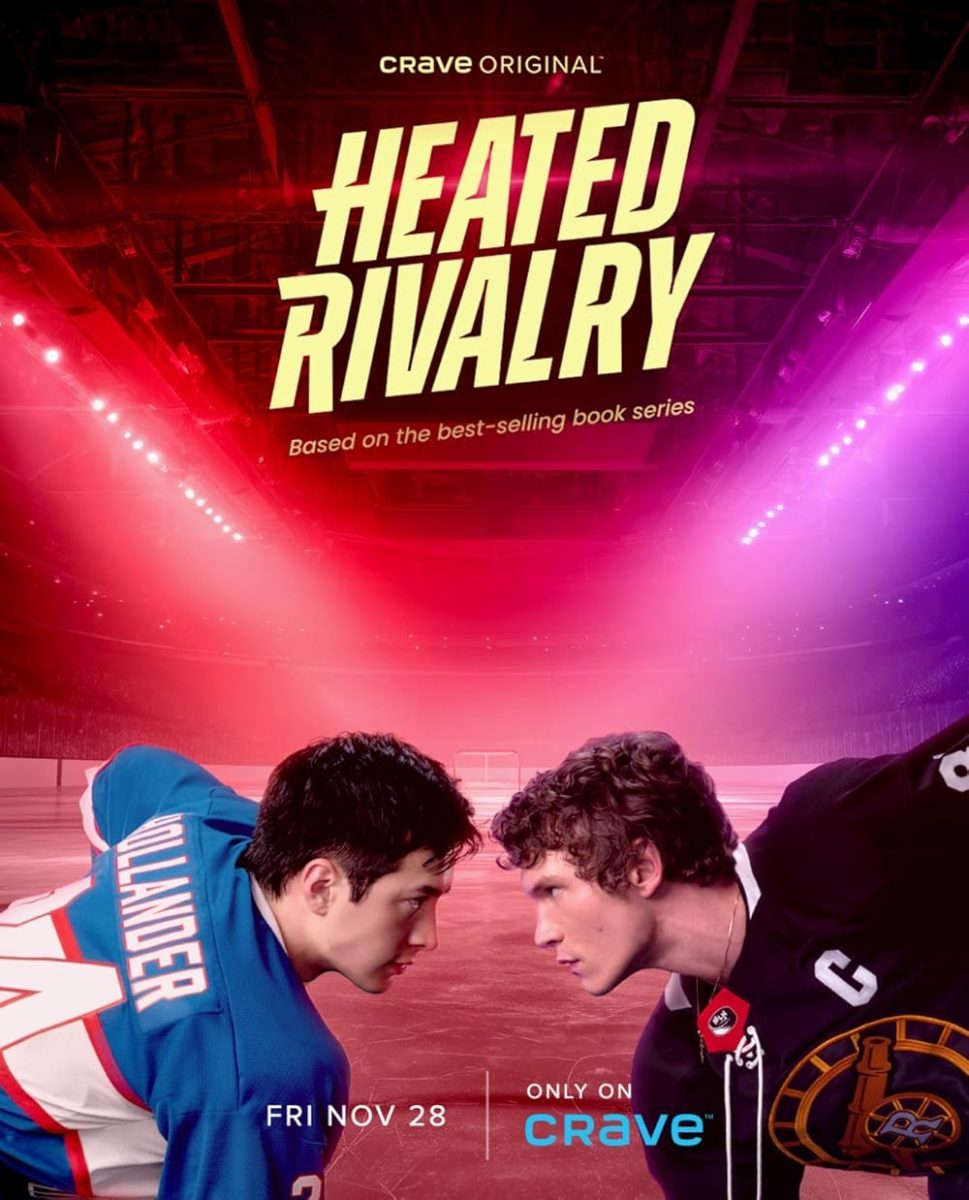
The release of the highly anticipated show “Heated Rivalry” has overrun social media for several months. Though there is still work to be done, the popularity of the show marks a significant step in the right direction when it comes to the accurate representation of LGBTQ+ people in the media.
Based on Rachel Reid’s popular series, “Game Changers,” the show focuses on Shane and Illya, two gay hockey players who fall in love. From the two actors playing Shane and Illya carrying the Milano Cortina 2026 Olympic torches, to Mayor Zohran Mamdani of New York advising his residents to stay home and read “Game Changers” during the 2026 snowstorm, the show and the book series have captured the hearts of millions of people.
The “Heated Rivalry” phenomenon is unprecedented; queer media has never received this much attention. But more notably, an LGBTQ+ show that is actually a portrayal of the queer experience — or a subsection of it — has received love from not only queer people, but all types of people.
“I feel that for audiences outside of the LGBTQ+ community, you can have two effects (of LGBTQ+ media),” senior Van Knudsen said. “I feel that (some shows and movies) can reaffirm certain negative stereotypes about gay people in a straight audience, but on the other end, if you have a story that actually truly portrays the queer experience … that can offer a different side of people viewing the gay experience. It’s not just a joke. It’s not just a caricature. This person has feelings.”
“Heated Rivalry” is unique in the sense that it not only serves as a relatable portrayal of gay romance but also resonates with audiences outside of the LGBTQ community. It tells a classic story of closeted athletes, but it portrays something anyone can relate to: yearning.
“I love the emotional vulnerability because a lot of people like us have experienced a lot of that stuff,” Knudsen said. “And I feel like it’s also good that it shows men crying because generally in sports dramas, you don’t see men crying. And it shows a kind of real representation of what it is like to be queer and what it feels like to be queer, because it’s not easy.”
But “Heated Rivalry” has evolved from years of LGBTQ+ people grasping for representation in mainstream media.
“Where it once was really, really performative for a very long time, (LGBTQ+ inclusion) is slowly starting to become less performative, more normalized,” Director of Forensics and gender studies minor Katrina Brominguez said. “Normally, you had a token gay character. Now it’s just obvious that there would be some gay characters in movies or TV shows. … It’s not quite to the point where there’s a lot of media where they’re the main character, but I think there’s definitely a push in that direction.”
In an even greater push for LGBTQ+ representation, the hit show “Bridgerton” set in Regency-era England, but is known for its diverse cast and storylines, has just announced its new season will feature a lesbian couple. Yet, in a shift from the massive amounts of support for “Heated Rivalry,” the upcoming season of “Bridgerton” has received a large amount of criticism from its fanbase.
“I feel like people are going to be like, ‘It’s changed its ways’ and ‘It’s not the same show,’ but it’s still the same show,” senior Alexia Carvajal said. “I feel like a lot of people are probably not going to watch it.”
A loss in potential viewership of “Bridgerton” for something as simple as focusing on two women represents the constant struggle that queer people still face in mainstream media. According to the LGBTQ Media Advocacy Group, there has been a significant drop in LGBTQ+ women in shows and movies. Within the past few years, Netflix has canceled or removed several lesbian led shows, including “Everything Sucks!” (2018), “Warrior Nun” (2022), “I Am Not Okay With This” (2020) and “She-Ra and the Princesses of Power” (2018), citing lack of viewership or licensing issues.
Representation is even lower for queer people of color. So, despite the strides that “Heated Rivalry” has made within the past year, there is still progress to be made. LGBTQ+ plotlines tend to tell the same story, where in reality, not all queer people live the same experiences.
“There’s always the classic, out of the closet, in the closet, which I find is overdone,” Knudsen said. “There needs to be just two people in the closet or two people out of the closet because it shows that queer relationships can just be normal, like any boy and girl.”
Once the media begins focusing more on representing the authentic lives of LGBTQ+ people, the more normal their existence will appear. Representation is everything, and giving audiences the ability to see LGBTQ+ people living joyful lives and having normal relationships paves the way for empathy and understanding in our society.
“When you realize that there’s no harm, there’s nothing that actually causes harm from that idea,” Brominguez said. “And so if (LGBTQ+ people are) in your literature, if (they are) in your media, if (they are) in your movies, your TV shows, you realize that there’s no detriment to the thing you were afraid of or the thing you were avoiding.”