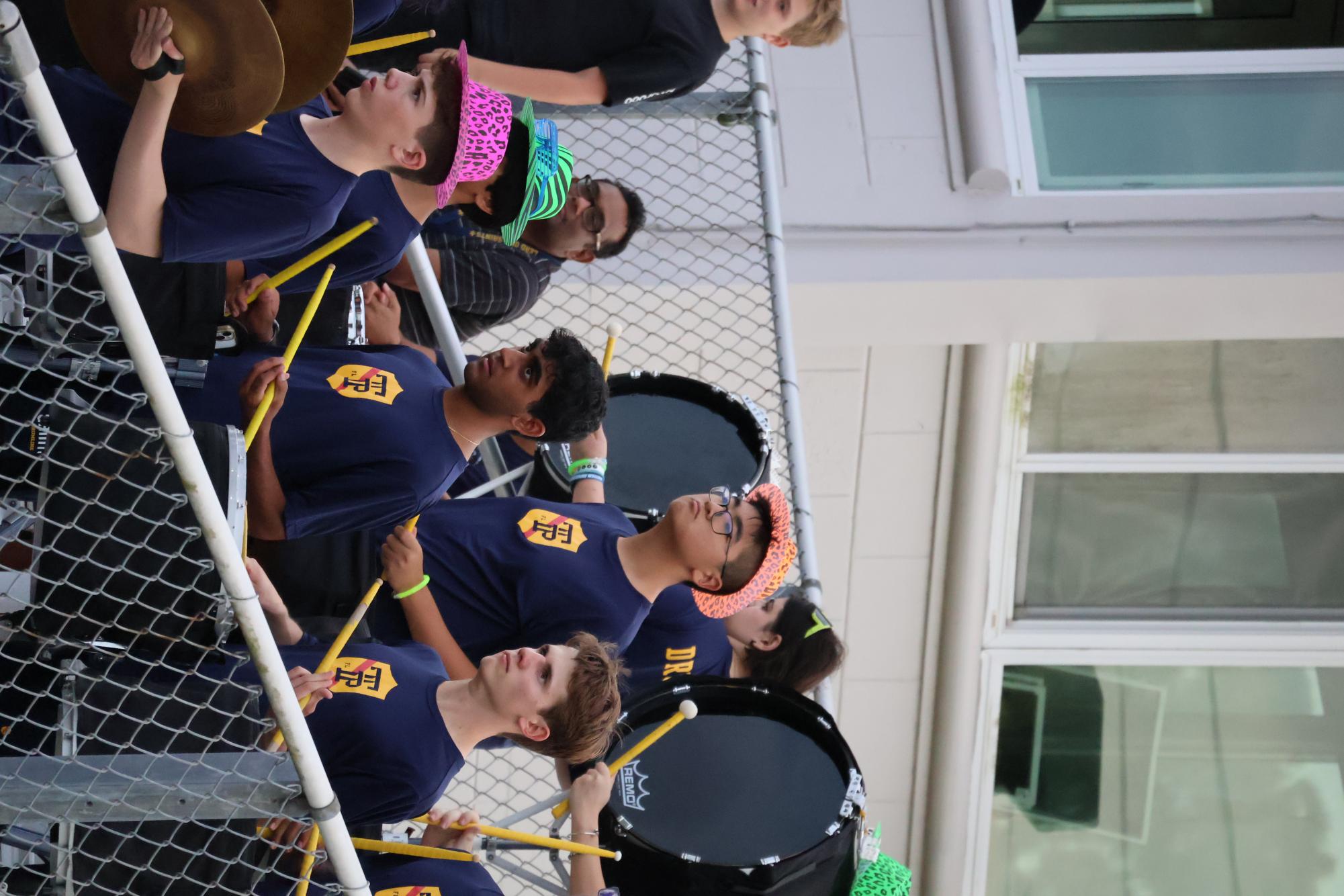
program, accompanies the varsity football team to all its games, boosting team spirit from the sidelines.
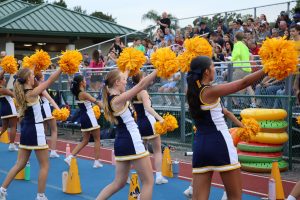
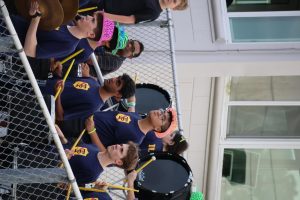
Other lead-As the Trinity Prep varsity cheerleaders get in position and the varsity drummers stand ready, they begin the game feeling as though they have to prove whether their sport deserves it’s classification as either a sport or not.
At the football game, cheerleaders move around consistently on hours on end, launching and supporting people on their shoulders, while drumline players carry 40 pound drums on their backs. Despite all these factors, football is the only recognized sport with everything else being entertainment. The complex and controversial discussion of what is and what is not considered a sport comes down to personal opinion and belief.
The definition of a sport According to the Association for Applied Sports Psychology, “Sport” means all forms of physical activity which, through casual or organized participation, aim at expressing or improving physical fitness and mental well-being, forming social relationships or obtaining results in competition at all levels.”
The Florida High School Athletics Association (FHSAA) considers competition cheerleading to be a sport, yet for Trinity’s cheer team they preform the same routines in sideline and competition cheer which could infer they take the same amount of physical exersion. Competition cheerleading officially became a varsity sport at Trinity in 2024-25 season.
FHSAA still does not recognize sideline cheer as a sport because it does not have head-to-head competition. Despite this, Trinity made the switch from considering sideline cheerleading as an extracurricular to athletic program but not a varsity sport.
“FHSAA is only going to do things that are going to (consider a sport a sport) where you can have a clear winner at the end, and because there’s not a competition piece to that,” cheerleading coach Rylan Smith said.“I think that’s why FHSAA doesn’t recognize sideline or winter (cheerleading) as FHSAA Sports. I think if there were some type of competition element, then perhaps they would (consider sideline cheer a sport).”
Sideline cheerleading does take physical exertion but does not face in competition.
“(Cheerleading is) definitely physically challenging,” varsity cheerleader sophomore Kirsten Olson said. “… you have to have the muscle and the ability to continuously dance or tumble.”
The argument of sideline cheerleading being an official sport comes from a place of traditional beliefs of sport versus entertainment. This opinion is formed within a certain side of society.
“I feel usually it’s boys who kind of overlook it (cheerleading) because they consider their sport like football, like it’s more difficult, but I feel it’s a different type of difficulty,” Olson said.
Since sideline cheer does not involve competition some people have come to the conclusion that it could not involve as much physical activity.
“Competitive cheerleading is a sport but I don’t think you really have to do very much (for sideline) unless you’re a flyer,” freshman Nate Robinson said.
Cheerleading is sometimes overlooked as a mostly rest sport but the activity has actually gotten more intense over time. The true definition of sport is an agreeable word to dictate both competition and sideline cheerleading.“The purpose of cheerleading has evolved over the years and I think especially with the addition of it within the Olympics,” Smith said. “That’s made people realize that the physicality is a much bigger part (when it comes to cheerleading).”
The discussion of what should and should not be considered a varsity sport at Trinity is a controversial discussion when it comes to drumline. With the recent switch from varsity sport program to art program it has brought up some differences with the 2025-26 drumline program.
“In the past it has been that having that … varsity sport name has helped keep people going,” drumline sponsor Mike Rogers said. “There is the potential that if that is going away (varsity sport title) it could hurt our numbers.”
While this also affects the students in drumline, others view drumline differently.
“I don’t think it’s a sport … (because it’s) not competitive,” Freshman Christan Martinez said.
The definition of a sport can be argued when it comes to the amount of physical exertion it takes to be apart. Drummers argue that the combination athleticism and coordination make it qualified to be a varsity sport.
“The fact that we’re lifting very heavy drums like that, in a way that the human body’s not meant for (and) walking with it long distances and as well as focusing on everything else,” Wood said. “You have to be athletic in a way and socially aware.”
Since becoming an art program the drumline team has gotten more opportunities and experiences compared to when they were considered a varsity sport.
“We have patrons of the art with us now and people who are wanting to donate via the arts … we have a permanent spot to practice and (before) we had nowhere we could march which as a result of that we didn’t always look the best,” Drumline captain Kinsly Wood said.
Students seem to disagree that drumline should be a varsity sport, which actually comes in favor for the drumline while considered as an art program.
“People see it as we lost something but in the end we gained a lot more than we lost, but in the end we gained a lot more than we lost. We now have a permanent spot to practice and because … when we were with athletics, we had nowhere we could march which as a result of that … people (on the team) were nervous when we marched (and) we didn’t always look the best (when preforming). ” Wood said.