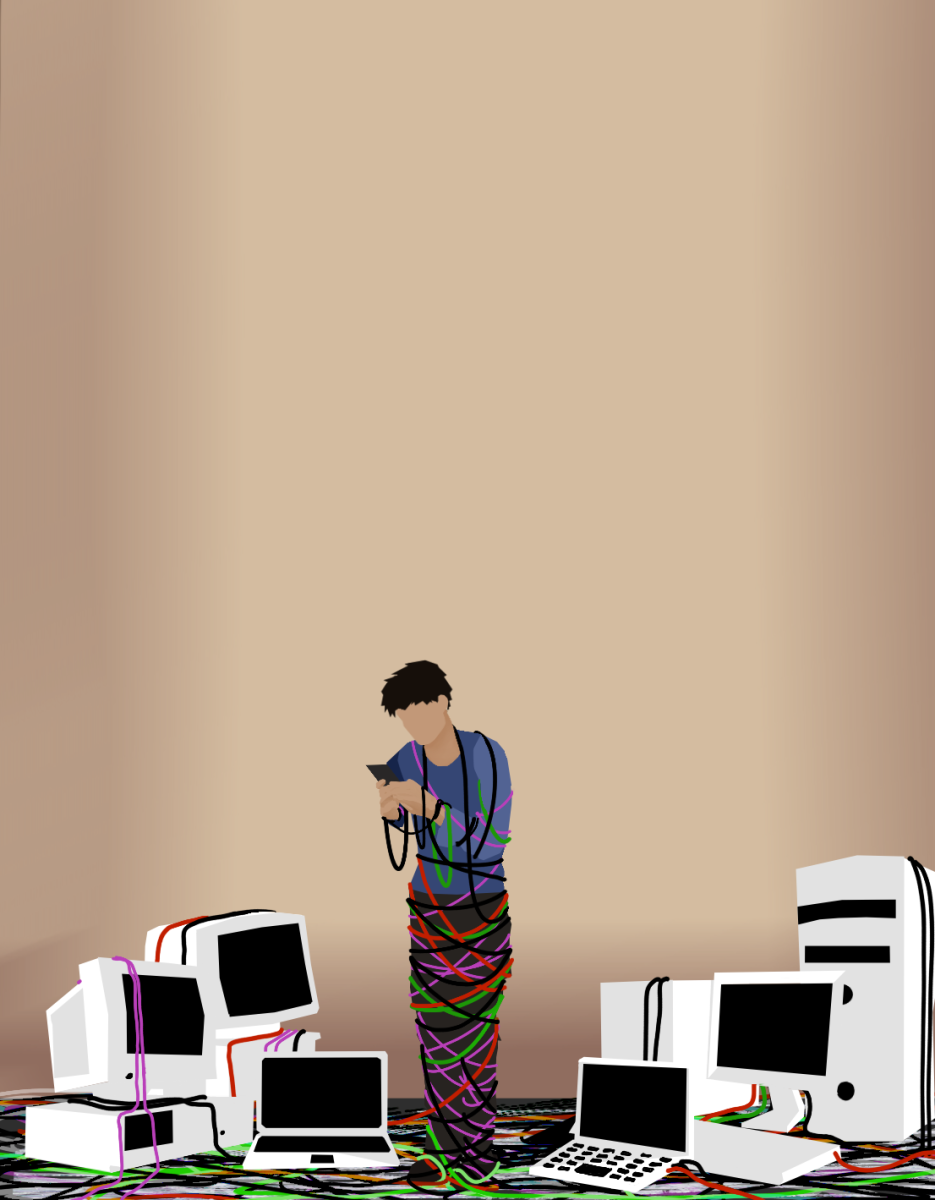
As the lights dim in the classroom, and the movie credits roll out, the only screen that matters is the one in students’ hands. Movie day used to be one of the most highly anticipated times in school, but now there is little enjoyment in the activity due to students’ lack of attention span. Constant digital engagement with technology and social media causes an excessive need for stimulation, making it difficult to focus on anything for too long. Whether it be in the classroom or at home, tasks that require patience now take longer to complete and are often interrupted by devices.
In Trinity classrooms, frequent use of technology has caused noticeable shifts in focus with class material. Eighth grader Chrysoula Rooth has observed firsthand the impacts on learning when devices are nearby.
“Technology has a large impact academically,” Rooth said. “You’re drawn to games on and texting on your computer, and then your attention span lowers, and it is just a mix of negatives.”
According to a Halmstad University thesis by Francis Phan, instant gratification and the need for new information from technology at a frequent rate has a high correlation to hindering effective prioritization, due to a lack of patience and an increased rate of task-switching. This lack of focus often leads to difficulty in completing tasks that require critical thinking and time management.
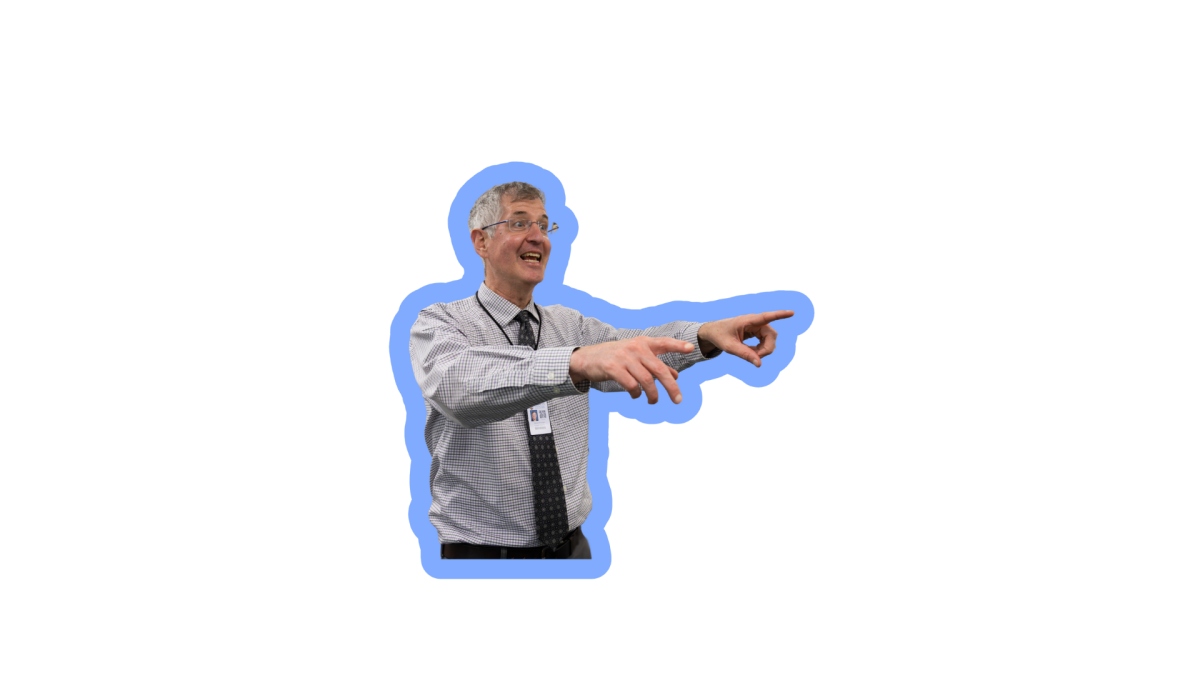
Because of this, psychology teacher Michael Brown chooses to set aside technology almost entirely during his class, only bringing it out to help keep students engaged with the content by playing educational games.
“The only time we interact with technology in an educational setting is when we do a Blooket, Quizlet or Kahoot at the beginning of class,” Brown said. “Other than that, I just avoid it.”
Technology not only impacts students’ focus in an educational setting, but in a social one as well. When allowed to be on a device, more often than not, the ability to hold a conversation without constantly checking it becomes difficult.
“I can tell that if somebody gets a message, they’re drawn straight to their phone, even if we’re mid-conversation,” Rooth said. “And sometimes that may happen to me too, and you don’t even realize it usually.”
With near-endless expanses of information readily available in seconds, a person can easily lose their patience when trying to handle setbacks.
According to a study from Technical University, Psychology Professor Bilian Marinov, having a constant stream of positive digital reinforcement challenges a person’s ability to have delayed gratification when confronted with a task. Modern technology and social media form a system where restraint is difficult to manage.
“Having everything at the ready constantly affects people’s ability to be resilient,” Massey-Burmeister said. “To have something that doesn’t quite go perfectly or doesn’t go the way they think it should.”
When the ability to have an answer within seconds is taken away, students often don’t have the desire or willingness to put in the effort to find an answer themselves, which can lead to the formation of bad habits and emotional patterns.
Through direct personalization and algorithms, the study explains that AI can shape the user’s cognitive processes and ability to come to proper conclusions without external help.
Although the effects of technology and social media are concerning, they aren’t permanent. The ability to focus is a habit that is easily trainable, especially for students who haven’t had it for too long.
“With enough diligent work, you can train your way out of just about anything,” Brown said. “But if we’ve established those habits at such a young age, it becomes that much harder to overcome them.”
Being able to look at the role of technology and consider the extent to which it is used in daily life is the first step to regaining the ability to focus and breaking the cycle of constant stimulation.
“We’ve tricked ourselves into thinking we need it more than we do,” Brown said. “Humans survived for millennia without social media, and I think we can do it again.”