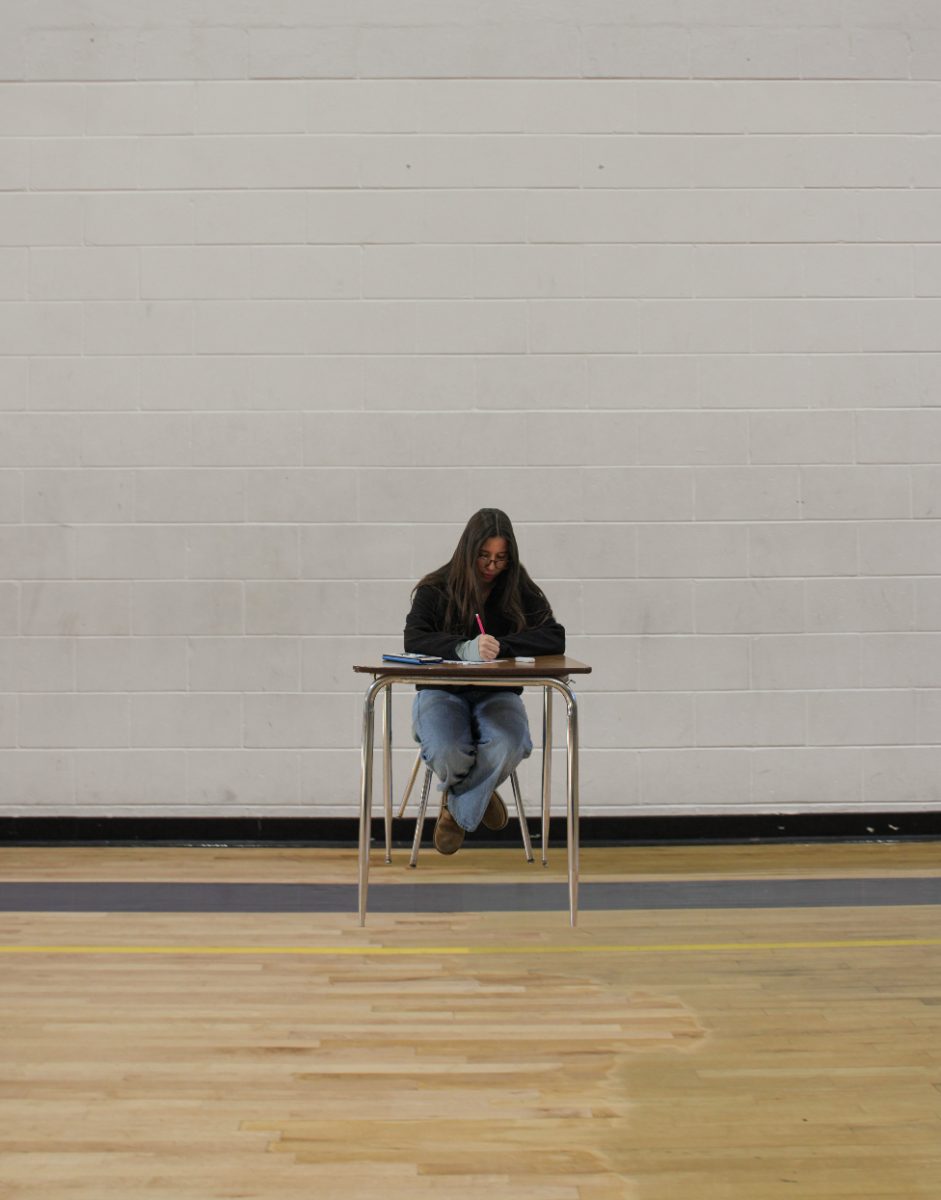
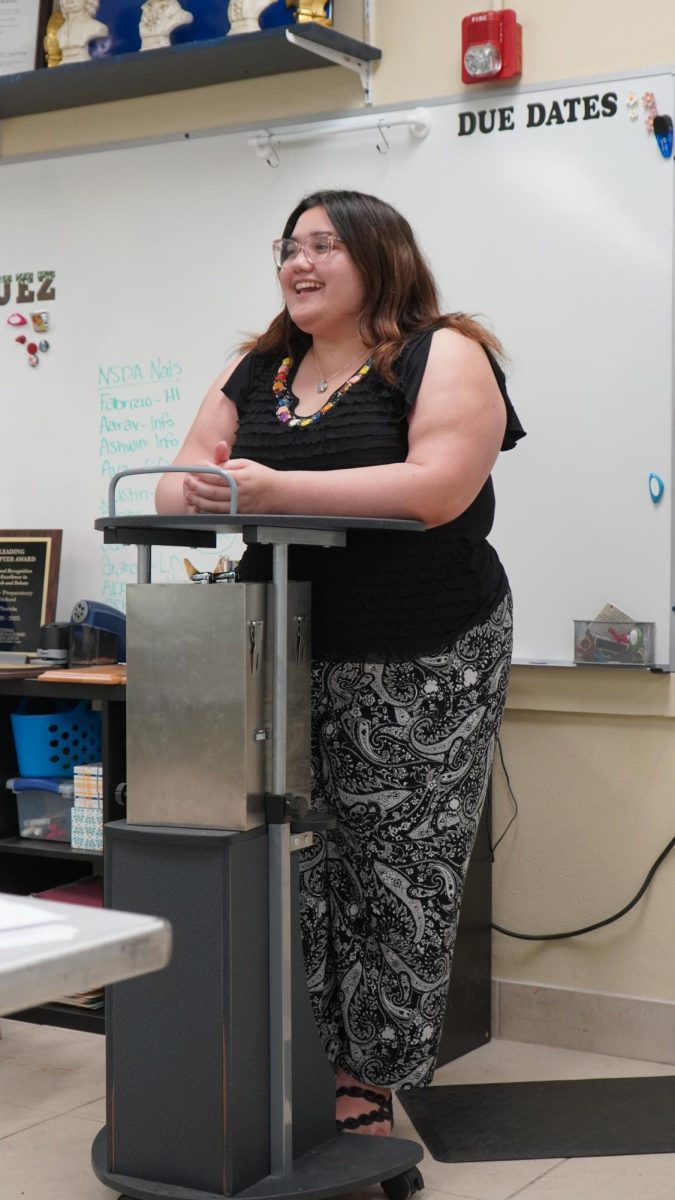
Fifty teachers at Trinity were asked the question: Do you use AI in the classroom? Thirty-four said yes.
Of course, the degree to which different teachers employ artificial intelligence differs, but the findings show that 68% of the teachers interviewed either use AI as a supplement or substitute for portions of their role as educators.
TEACHER USE
To find an accurate representation of how AI is used, teachers across all grade levels and subjects were polled: 67% of math teachers, 40% of English teachers, 71% of science teachers, 77% of social science teachers and 63% of world language teachers said they have utilized AI in the context of their profession.
This number reflects national trends. According to a June Gallup poll of 2,232 U.S. teachers working in public K-12 schools, 60% of teachers are using AI for their work. Three in every 10 teachers do so on a daily basis.
At Trinity, many teachers say AI has helped with tedious work, like generating rubrics, creating ideas for class activities or checking grammar, providing more time for feedback and engagement.
Additionally, teachers have said that they use artificial intelligence to make practice quizzes for students, translate passages, improve the quality of their writing, generate emails and even polish their mid-semester comments.
For mid-semester comments, science teacher Nicholas Eliason prompts AI with multiple sentences describing each student’s personality and anecdotes about them, such as their participation in labs. AI can then help to generate the comments, which Eliason has found to allow him to best provide detailed, unique student feedback.
“I write a blurb to ChatGPT and say, ‘Can you please help me write a 3-5 sentence student comment,’” Eliason said. “I’ll list adjectives about the student that then the AI uses … and then I’ll usually edit it a little bit because usually it’s a little too flowery for my personality.”
Beyond help with comments, teachers on campus have found unique and productive ways to utilize AI. English teacher Steven Krueger says that he experimented with AI to see how it would respond to his lessons – he compared AI’s response to student submissions to verify their authenticity.
“Sometimes I’ll put the prompts of things that I intend to use into AI to see potentially the kind of responses it might generate,” Krueger said. “But I know that also with AI too, depending on the prompts that are used and the way the those prompts are revised, that can vary.”
Cases like these prove that artificial intelligence can be employed as an aid by teachers and perhaps even enhance the quality of education. But if its use starts to turn into the replacement of human thought and creativity, then at what point does AI become the teacher?
SCHOOL POLICY
On a national level, educational systems have found productive ways to outline for teachers the do’s and do not’s of AI while also providing rigid guardrails. Taliaferro, a county in Georgia, has a clear AI policy for educators.
Their policy states that “educators will receive training on the ethical use of AI and its integration into the curriculum. AI tools must undergo a rigorous evaluation process before being approved for classroom use. Regular audits will be conducted to ensure compliance with this policy and to assess the effectiveness and impact of AI in the learning environment.”
To discuss topics like the ethics of AI use among teachers, Trinity has a Technology Committee, which according to Chief Technology Officer Alex Pochaski, helps develop the school’s stance on AI usage.
“There’s general guidelines,” Podchaski said. “We want teachers to do a little bit of experimentation so that they understand what these tools are so that we can properly place them in the curriculum where they belong.”
Committee member and fine arts teacher Caberbe Joseph says that Trinity aims to have more of an adaptable approach so teachers have the leeway to see how they can best fit AI in the classroom.
This flexible policy has led to differences between departments. Social science department chair Robin Grenz encourages teachers to explore the applications of artificial intelligence. English department chair Chad Pentler opposes the use of AI for the department but has no written policy.
Despite the flexibility in the use of AI, Podchaski said the school is clear on the need for teachers to use Google’s Gemini over OpenAI’s ChatGPT because of its privacy policies. Gemini guarantees it does not take any inputted information to employ as data, and Pochaski refers to it as a “walled garden.”
However, there seems to be some lapse in communication, as multiple teachers interviewed said that they exclusively use ChatGPT. Unlike Gemini, ChatGPT reserves the right to take imputed data to improve its own models and store into its databases.
REFLECTION
Teachers constantly have to perform their job knowing that students’ work may not be authentic, so when they also use AI, the dynamic of education is at risk of further decay.
We are not too far away from a world in which a student turns in a ChatGPT’d assignment to their teacher, and that teacher uses ChatGPT to grade it and provide feedback. If that world does become our reality, then education might be lost forever.
Nevertheless, AI does pose significant benefits for teachers. If they delegate generating a rubric to AI instead of spending two hours making it themselves, then perhaps they will have more time to spend one-on-one with students.
Here is the solution: moderation. To allow for learning to thrive in a modern era of technology, teachers need to ensure that AI is being used as a supplement and not a substitute. To enforce this, schools need stronger, enforceable policies set in place so there will be no chance that teachers excessively use AI.
Artificial intelligence is forcing our education to evolve. Let’s make sure that we are the ones in control.
Spotlight is a beta-department aimed at delivering uncensored, investigative journalism to the Trinity community. The “Reflection” section is the journalist’s opinion on the subject, while the rest remains neutral. If you enjoyed reading this article, please send comments to [email protected].