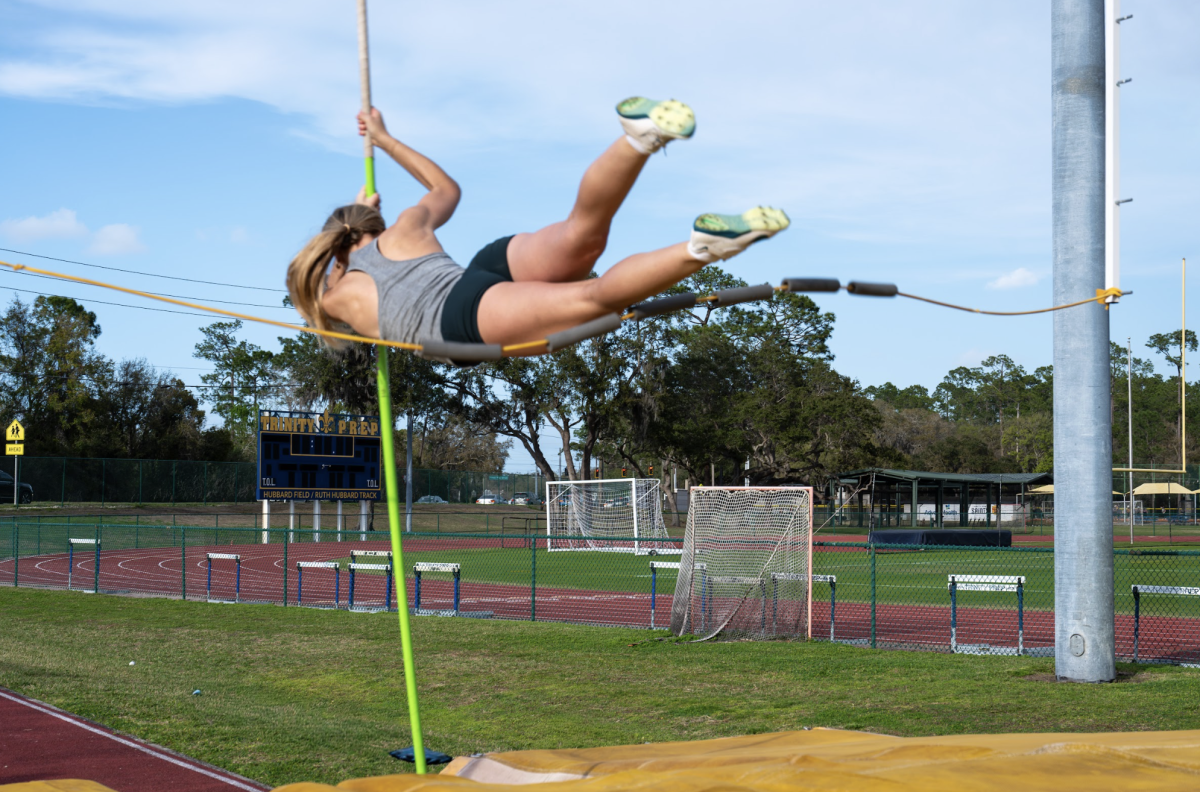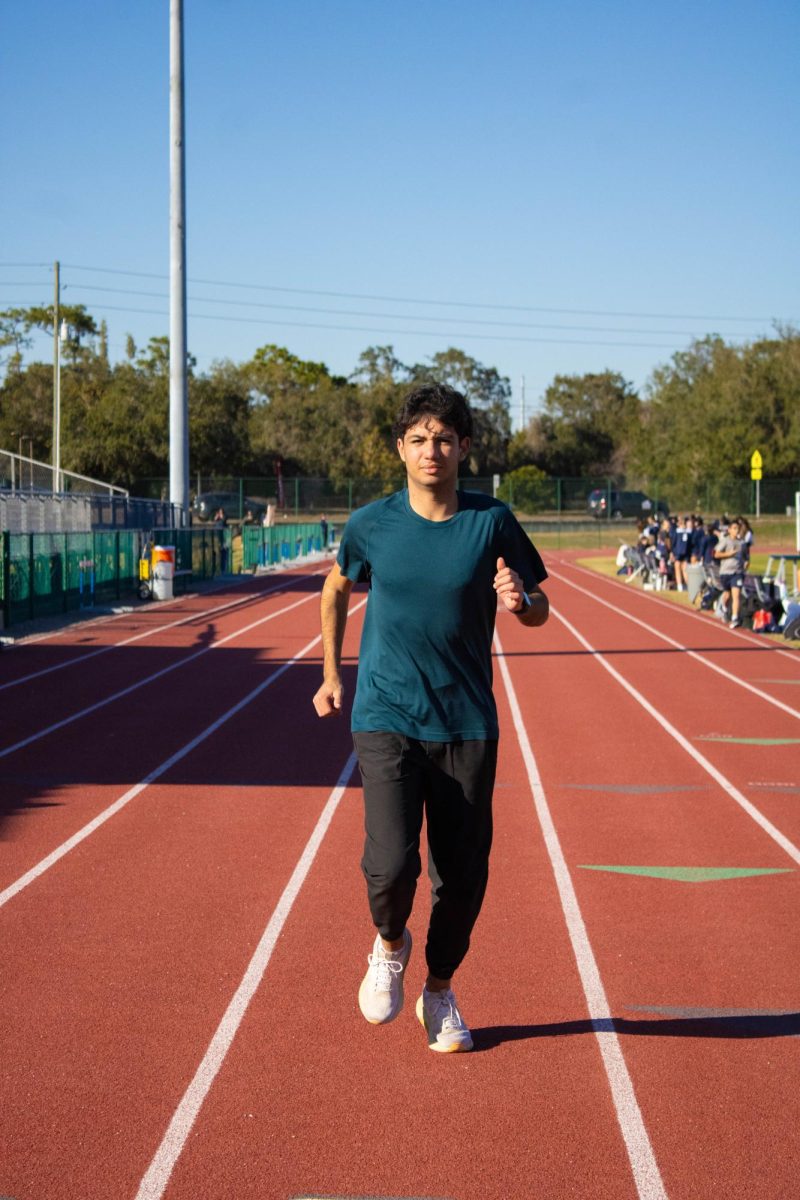
Every year for one month, student athlete Sam Makki wakes up before the crack of dawn to consume all the food and water he needs for the day. He attends school and track-and-field practice five times a week, but he eats and drinks nothing. Makki is one of many students and people worldwide who celebrate Ramadan, a month-long fasting holiday for Muslims, which is based on a lunar calendar, shifting forward 10 days every year. This year, Ramadan starts on February 18th. Those who practice Ramadan abstain from food from sunrise to sunset, with the hours getting longer and the task tougher each day. Along with fasting for around 12 hours for 30 days straight, Makki runs in the blazing Florida sun for two hours after school on an empty stomach.
“Usually, I’ll wake up early and try to get a lot of water in,” Makki said. “Sometimes I take liquid IV or drink Gatorade … then I’ll still train normally, but I’ll remind my coach that I’m fasting, so if I don’t seem as fast as I usually do, it’s because I don’t have any food or energy in me.”
Plenty of pro athletes, like Dallas Mavericks athlete Kyrie Irving and Saudi Arabian soccer player Karim Benzema, have to work around this as well, and each person has their own way of training while fasting. According to Men’s Health, some people, including Makki, train before they break their fast but may have to scale down their workouts due to their lack of proper nutrition. When it’s time to eat again, they drink protein shakes or take supplements instead of a traditional dinner to help their stomachs adapt to the lack of food. In the morning, they drink water with electrolytes to counteract the mineral loss.
Others prefer to train very early in the morning, right before they start fasting, so they can consume the necessary nutrients to survive the day and not pass out halfway through. Amanda Dean, assistant boys and girls varsity track-and-field coach, has worked with runners fasting during Ramadan to find the best strategy to maintain their performance during meets and physical needs.
“If it’s a day where we’re doing a hard workout and (the athlete is) not feeling good, they might have to decide not to go to practice that day if it’s going to be dangerous for them,” Dean said. “I have had some kids who choose not to fast during their seasons, even though I know that they normally would otherwise.”
Although it is extremely challenging to train in the heat while fasting, it’s an important part of Islam, so Makki always tries his best. He acknowledges that it’s not easy to do, but fasting during Ramadan is important to him, so he tries to adjust his training schedule rather than his fasting schedule
“My religion really motivates me (to keep training),” Makki said. “I like to think of myself as a religious person, so I remind myself that there are professional athletes who still train during Ramadan, so if they can do it, I should try, for my religion.”
Not only is fasting during a sports season mentally challenging, but it is also hard on the body. According to Nature, an international science magazine, while fasting allows the body to adapt and conserve as many carbohydrates as possible, it may also mark a significant loss of lean body mass. With his final track-and-field season coming up, Makki offers a piece of advice for other fasting athletes.
“Try your best,” Makki said. “If we feel like we’re able to fast while we’re doing our sports, we should try at least. But if (you) don’t think you can fast, put your health first.”