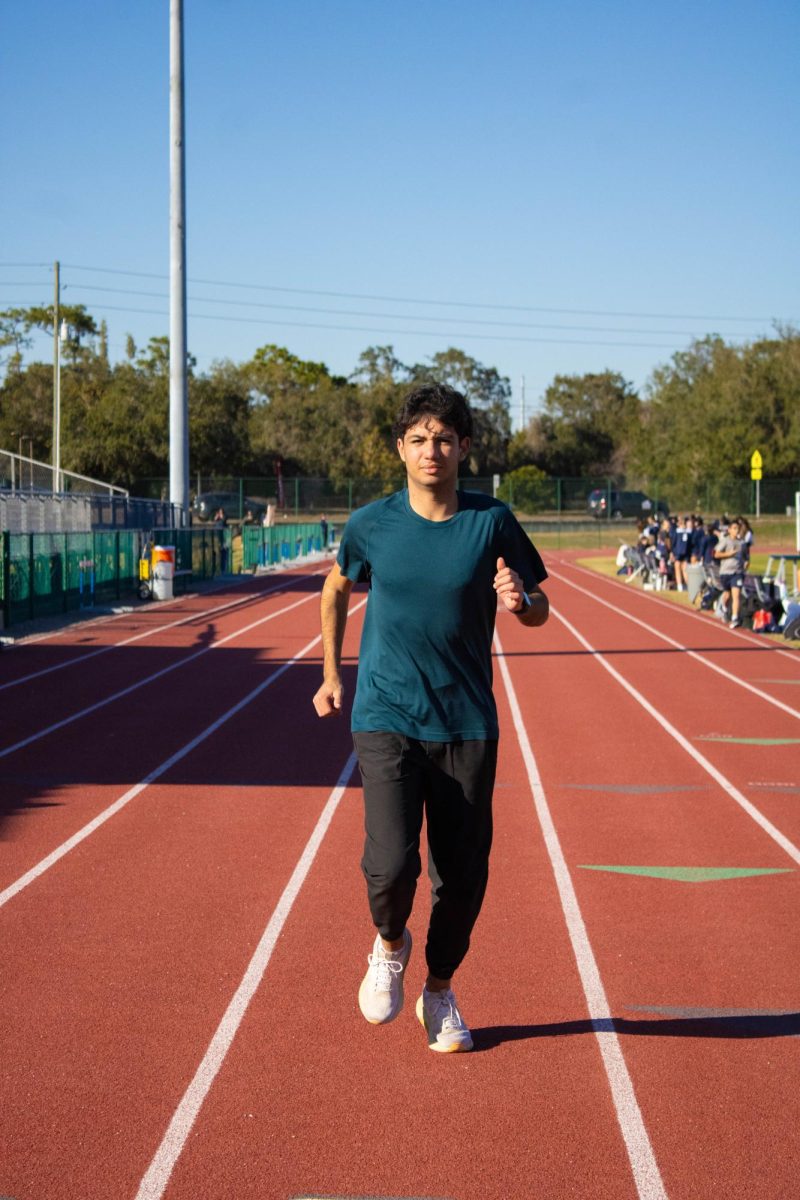
Senior Lorenzo Cavalieri has worked under nearly four prospective coaches during his five years with Trinity Prep Aquatics (TPA). Through the 2000s-2010s, TPA built a reputation for state titles, consistent podium finishes, and dominance across Central Florida. Yet in recent years, that success has proven difficult to sustain as the program has struggled to maintain a permanent coaching staff.
“When we had the coaching changes here, it was really hard for a lot of us because you’re going from one coaching style to another really fast, and that’s really detrimental to younger athletes,” Cavalieri said. “Swimming is a pretty unforgiving sport. For every day you don’t swim, it’s like five days you have to regain that speed. So when you have a month or even two months where you don’t have a coach, it’s pretty hard to get back.”
Cavalieri’s experience reflects a broader trend across NCAA athletics. At the collegiate level, coaching instability has accelerated with the rise of Name, Image and Likeness (NIL) opportunities, the transfer portal and growing financial incentives tied to immediate success. Programs are often built and dismantled, faster than ever before.
“I feel like the biggest thing was the development of a player,” Cavalieri said. “When you have a transfer portal that’s that open, as well as NIL deals and money offered to coaches and atheletes, you’re going from vastly different programs. It kind of ruins the developmental aspect of the sport.”
One of the most visible examples came this past year in college football. Former University of Mississippi head football coach Lane Kiffin transformed the program from a struggling SEC program into a national contender over six seasons. Yet before the postseason, Kiffin accepted an offer from Louisiana State University, a program with deeper championship history and greater financial resources. His departure left Ole Miss without leadership during the most critical stretch in program history and sparked a wave of players and struggle when coaching lacked stability.
Former five-star recruit who played under football coach Brian Kells and Division I running back Lorenzo Lingard has lived through that instability firsthand. Recruited amid national attention and elite programs, Lingard said coaching turnover repeatedly reshaped his collegiate career.
“As a young 16-17 year old kid in the process of choosing a college, you’re vulnerable,” Lingard said. “You don’t know much, and what really makes the decision feel right is the coach. When the coach leaves and goes into another program, everything changes.”
Lingard first faced instability at the University of Miami, where internal coaching changes made it difficult to establish a consistent role. That uncertainty intensified when head coach Mark Richt was fired at the end of the season, forcing Lingard to adjust to a new system before fully developing in the old one.
After transferring to the University of Florida, Lingard encountered a similar situation when head coach Dan Mullen was dismissed and replaced by Billy Napier. Once again, a new staff brought different schemes, incoming recruits and increased NIL-driven competition, ultimately leading Lingard to transfer to the University of Akron in search of a consistent and an impactful role.
“With the coaching changes, the word (among NFL scouts) was I didn’t have enough development,” Lingard said. “I had talent and natural skill, but ball knowledge and strategy were things they didn’t see because I had so many different coaches.”
With the ever evolving transfer portal and NIL landscape, it is ultimately up to the coach to really build the culture in the program for the short time they are there or their players are there for.
“The transfer portal makes the game more competitive, but it kills the brotherhood of staying in one program and growing together,” said Chaz Williams, Trinity assistant football coach and ex-DI player for Georgia Southern. “It takes a special coach to get everyone on the same page now. A lot of that development gets lost.”
Coaches are at the center of development and team culture for most athletes at both the high school and collegiate levels. Trinity coaches look to extend the values of the school to the players and the culture of excellence bred through camaraderie — the same is true at any program. Cavalieri has seen this parallel in his time under coaching changes.
“The biggest thing for a coach is the development of a player,” Cavalieri said. “If you go to an academy overseas, you’re there for up to five years, training with the same people, the same coaches. You’re building culture and developing from that. When you’re constantly moving between programs, that developmental aspect gets lost.”