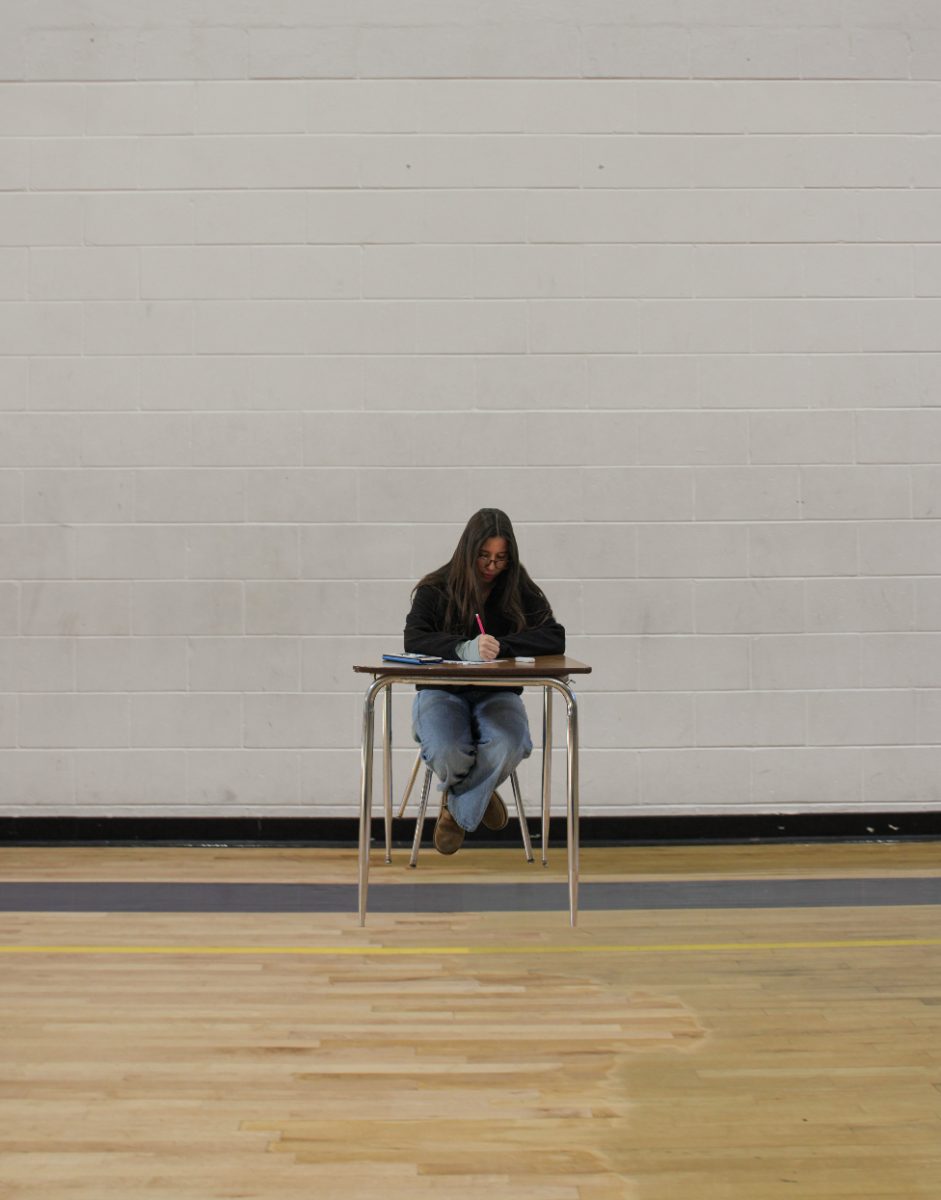
After disappearing in previous years, the after-school testing program returned this year for upper school. The program was originally put into place prior to COVID-19 and then had to be removed due to COVID-19 protocols. The program is a way to relieve the stress and disorganization that comes with chasing students down to make up tests.
The program was originally removed due to COVID-19 protocols, but it was a program many teachers enjoyed and were hoping would come back.
“Ultimately, the stuff we were doing before COVID worked fine,” social science teacher Brandon Burmeister said. “We just had to remember to put it back in.”
The program was put in place with the idea of limiting the number of students who were skipping class simply because they did not want to take tests. Additionally, it was complicated for teachers to schedule a time that worked for both teachers and students.
“Lots of teachers use it, I think it’s been effective,” Assistant Head of School Sebastiaan Blickman said. “I think it’s been nice for the teachers to sort of take that off their plate.”
The program also brings back the high-level standards of accountability that come with being a student at Trinity Prep.
“Holding students a little bit more accountable for (testing), I think is in line with who we are, right?” Burmeister said. “Trinity Prep is Trinity Prep. So, students, teachers and everybody holds themselves to a standard, and I think we have to hold ourselves to a (high) standard.”
Not only does it take a burden off teachers, it also helps with the inconvenience for students who have to use their free time to meet at breaks, lunches and before and after school. This gives students one place to meet at a known date and time. There are still things to be worked out about their students being given enough time to catch up.
While the new program cuts out the confusion of where to test and what time it also creates anxiety about when to take tests after being out.
“I think for families, it’s actually been tough and not as effective because I think that there has been either misunderstanding, miscommunication or I haven’t been clear enough in the fact that we don’t want sick kids on campus,” Blickman said.
Since the program is new for many students, there has been a lot of stress and worry over how the program would work out and how accommodating administrators and teachers would be about returning for illnesses.
There has been confusion surrounding when students are meant to make up tests. Students and families are being told that they need to take their tests the next time they are on campus, but Blickman has clarified that if you are gone for six days, he will give you six days to make it up.
While some teachers who were here in past years are familiar with the program, there are a lot of new teachers who are navigating it as much as the students are.
“I think it’s just a (matter) of getting used to and institutionalizing the program again, right?” Burmeister said. “So that we don’t have to remind everybody, you missed this test, then you go to after-school testing and you take it. Once we just institutionalize these changes and rules, it (will) just become commonplace, I think it’ll be fine.”
I think it’s just a stand of just getting used to and institutionalizing the program again, right? So that we don’t have to remind everybody, you missed this test, then you go to after school testing, you take it. If you’re extended time, we give you 60% of your test, and then you go to after school testing for the rest of it. Once we just institutionalize these changes, institutionalize these rules, and it just becomes commonplace, I think it’ll be fine.
In the future there are hopes to extend the program to middle school as it could equally benefit both high school and middle school students.