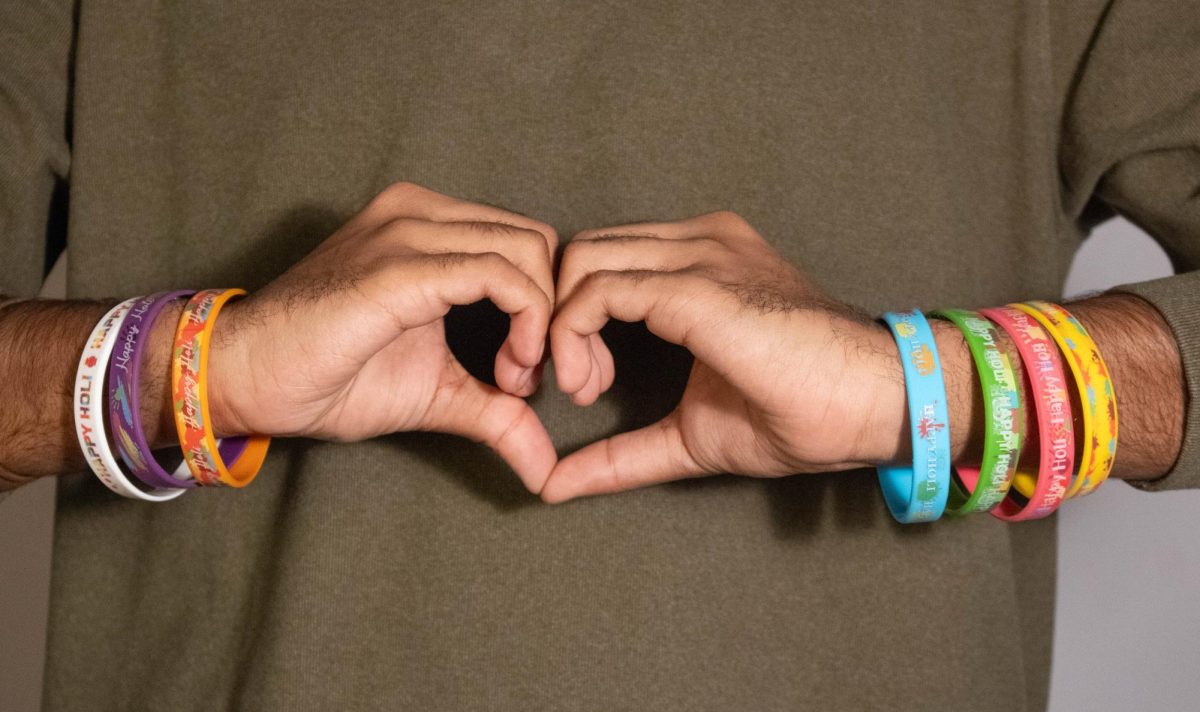
Students compare colors and trade bracelets while enjoying traditional food with friends throughout the day. Hosted by the Diversity of Spirituality, Thought, and Perspective Student Advisory Council, Trinity Prep will celebrate Holi on March 6.
Originating in India and widely observed across South Asia, Holi marks the arrival of spring and the triumph of good over evil. Traditionally celebrated with large gatherings, colored powders and shared meals, the holiday fosters joy and togetherness. At Trinity, the event provides students an opportunity to engage with and learn about the Hindu faith.
“One of our goals this year was to sort of expand and to not repeat the same (festivals) over and over again,” Assistant Head of Upper School and Sponsor of the council Sebastiaan Blickman said. “We realized last year that we didn’t have one that represented the Hindu faith tradition. So we looked at the calendar and thought that having a Holi celebration would be kind of fun for everybody.”
At its core, the Holi celebration aims to create space for students to share an important part of who they are.
“Oftentimes religion is a really fundamental or central component of a person’s identity,” Blickman said. “If we’re going to be one big Trinity family, I think it’s important for us to value and to allow space for everyone to be their true selves. If we can do that for a day by allowing students the opportunity to learn and to engage in a new tradition, and also to celebrate and sort of have fun, you’re accomplishing a number of goals.”
For some students, the event bridges the gap between their home traditions and their school life.
“I know a bunch of my close friends, they don’t know about my cultural traditions or they don’t know things I do at home or with others in my culture,” senior and founding member of the council Ishan Choksey said. “So this is just one way for them to actually, to learn more about who I am as a person. It makes us better friends overall because we know each other on a deeper level.”
To prepare for Holi, the council has been meeting with parents and community members who have experience with cultural festivals. They are helping with food preparation, setting up activities and ensuring the event runs smoothly and retains cultural authenticity.
“We had to branch out to parents to see the amount of help we could get,” Choksey said. “They were glad that traditions they’ve celebrated when they were a child and still as an adult are being brought onto campus. So they were excited and wanted to help.”
At previous events, the council has struggled to maintain student engagement, so ensuring active student participation is a top priority for this event.
“We’ve learned over time what’s engaging, what’s exciting and what people like to do,” Blickman said. “How can we make this appeal to the most students and faculty possible? That’s been something we’re working on.”
The council is ensuring that students can learn about Holi and its cultural significance through games and presentations, including a talk by a speaker from the Hindu Society of Central Florida. After the assembly, students will collect colored bracelets in the Quad and trade them throughout the day, and lunch tables will provide food for everyone to enjoy together.
“We have a time blocked off for people to come into the auditorium for us to present what Holi is,” Choksey said. “We’re just hoping that people will kind of get interested in what it is, and by telling them we have stuff outside for them to learn about and have food for them to eat, they’ll have an incentive to go out and try it.”
While the colors and games draw attention, organizers hope students also reflect on the tradition’s deeper significance on connectivity.
“It’s just connectivity between your family and friends,” Choksey said. “It’s a time of the year that you can actually come together and show your love for each other.”
More than just a burst of color on the Quad, organizers hope the celebration leaves a lasting impression.
“I hope students recognize that there are students here, friends of theirs, classmates of theirs and teammates of theirs on campus who are of a different faith tradition, who celebrate their faith in this way and can learn something by engaging with them,” Blickman said. “Hopefully embedded within that learning is a respect for and an admiration for various religious traditions and cultural practices that follow.”