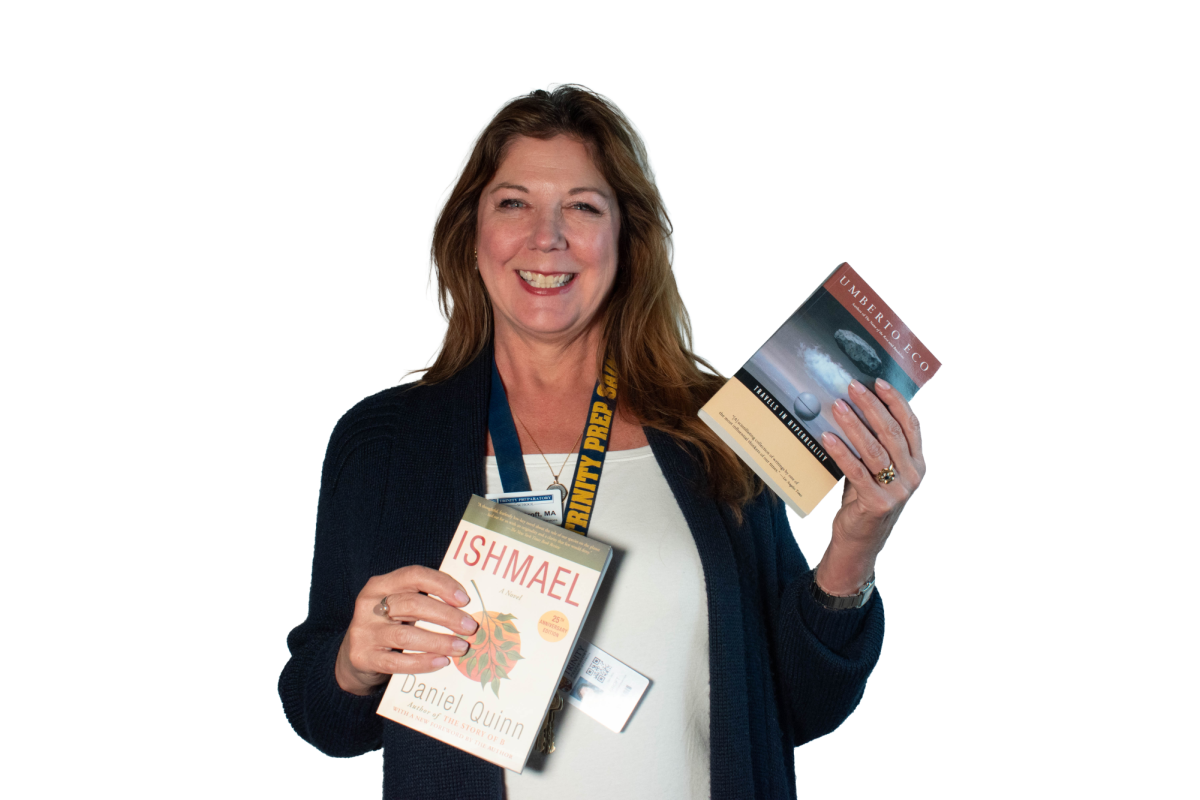
As a child, librarian Lee DeGroft spent most of her time with her family on a part-time sailboat during the summer. With limited entertainment options, DeGroft learned to read at the age of 4 and quickly became a book lover.
“That started really my lifelong love of nonfiction, which people are sometimes surprised (by),” DeGroft said. “I do love fiction, I love novels, but nonfiction is my favorite genre.”
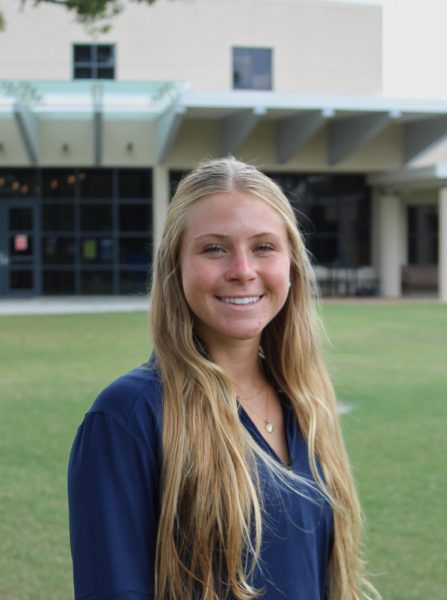
A book-loving English teacher, Hannah Schuttler, also began reading at a young age, around 6 years old.
“My mom had taken me one summer to the library to get a library card,” Schuttler said. “She let me check out three books, and I read all three books in the afternoon.”
The first books that she fell in love with were from the “Harry Potter” series, after being inspired by the films. She read series, over 20 times.
“I wanted to see the movie, and my mom had already read the book, and she wouldn’t let me see the movie without reading the book,” Schuttler said.
Eighth grader Adela Supertino fell in love with the same book when she was in third grade. What began as a childhood favorite soon grew
into a lifelong passion for reading.
“(The Harry Potter series) is still a staple today, and it kind of just started me on fantasy, which is my favorite,” Supertino said.
For others, such as sophomore Derek HeyworthDavis, it took them longer to fall in love with reading.
“Just after spring break of ninth grade is when I got into reading Agatha Christie,” HeyworthDavis said. “After that, I transitioned to reading Frank Herbert Stewart novels, starting out with the first one and then working my way through the series and then going on to the expanded books that his sons wrote.”
According to Schuttler, as one’s age advances, their book taste changes over time based on their life experiences. Some readers, like HeyworthDavis, love political thrillers and complex systems. Others are drawn to fantasy worlds, such as those found in “Harry Potter” or “The Cruel Prince.”
What people read reveals what they value — whether it’s adventure, logic, imagination or understanding people.
“I really liked fantasy and dystopian when I was a kid, but as I’ve gotten older, I’ve really gotten into historical fiction,” Schuttler said.
The beauty of switching book types is that it allows everyone to have their own “book world” that reflects their needs at that moment. Some books cater to people’s interests, while others change their perspective.
“I think ‘To Kill a Mockingbird’ changed my life,” Schuttler said. “And it changed my perspective on literature, it changed my perspective on the world, and that was what changed literature for me.
Books also provide good lessons and insightful truths.
“‘Powerless’ shows not to underestimate people, which I’ve done before,” Supertino said. “And even sometimes not to trust people closest to you.”
Authors do not strive to create characters who are perfect, so readers can connect with them on a deeper level.
“I think a lot of the characters that are flawed, the ones that we connect to, [are] because they’re not perfect,” Schuttler said. “They have attributes that we aspire to [be] or that we value, but also we can see their flaws. We also see this within ourselves. And so any character that you can connect with … (becomes) like a mirror of yourself.”
Reading feeds people’s imagination, pulling them into the story, not only allowing them to see through the eyes of others but also to escape their own lives and seek one filled with more excitement.
“I could certainly live in an Agatha Christie book,” HeyworthDavid said. “(I) wouldn’t mind being around a bit of intrigue and mystery, as long as I’m not the one being murdered.”
Others are perfectly comfortable with their own lives, simply enjoying observing the events unfolding in their own world.
“I don’t do well back in the past, because I like air conditioning,” DeGroft said.
Reading does more than fill time — it shapes how people think and creates connections among those who share a love for books.
“All of life is story,” DeGroft said. “Whether you’re watching a movie or reading a book, that’s how we make sense of the world.”