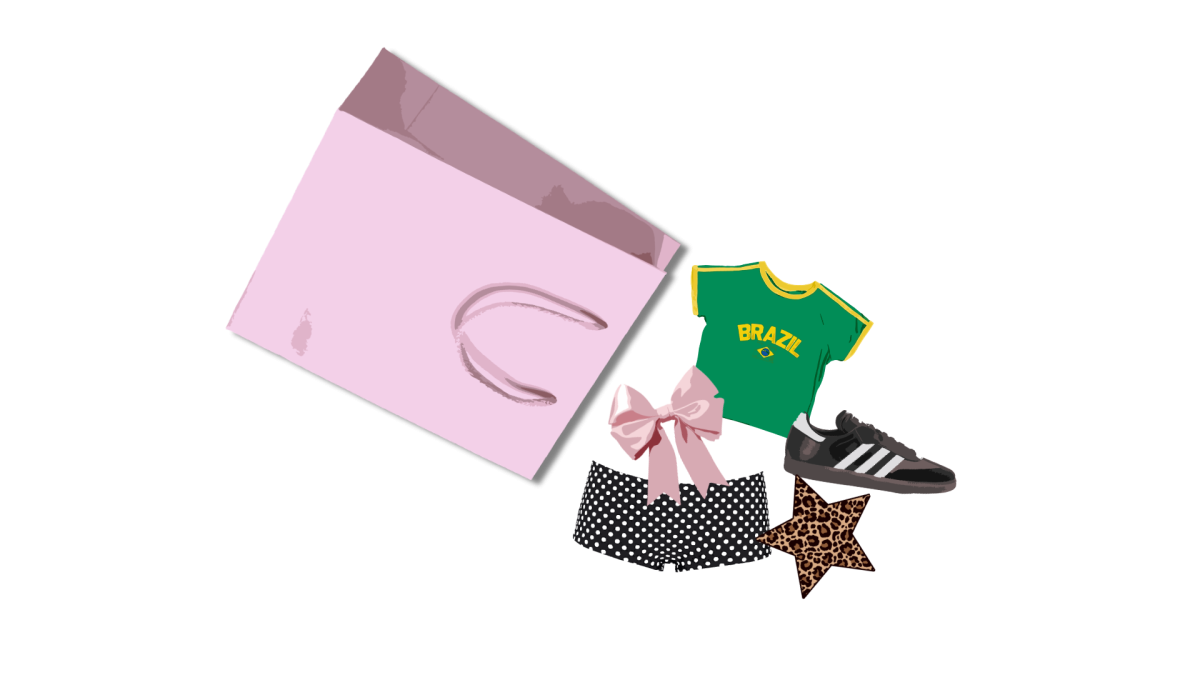
Sophomore Jonathan Nowlin walks into school wearing a bright pink outfit, earrings and confidence to match. Unfortunately, not everyone approves. At first, it bothers him. But instead of changing his style, he made a decision: wear what he wants, regardless of what others think.
“I’m just going to do me,” Nowlin said. “I’m not going to let anybody tell me what to do and tell me how to dress because I know how to dress. You need to wear (something) because it’s what you want to wear. It’s your opinion. It (shows) your perspective on your life.”
Two decades ago, that same outfit might have earned more stares than compliments. Today, it’s just another expression of personal style. Men’s fashion, once boxed into rigid expectations, is expanding, and with it, the perception of masculinity itself.
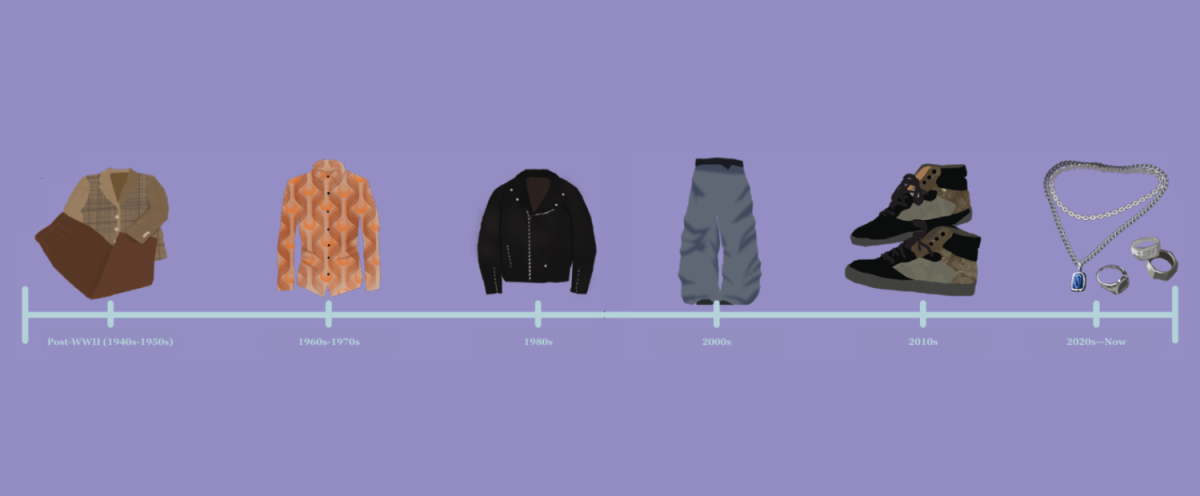
This shift, of course, did not happen overnight. According to the Saint Peter’s Tribune, men’s fashion has gradually become increasingly individualistic over time. After World War II, influential figures like David Bowie and Jimi Hendrix began challenging traditional norms through bold, expressive outfits. This was further amplified in the 1980s with a focus on individuality, while the 2000s saw the rise of streetwear blending with high-end fashion through brands such as Supreme and Off-White. More recently, celebrities such as Harry Styles and Billy Porter have contributed to a broader acceptance of unconventional styles in men’s fashion.
Self-expression through fashion has shifted, not only in industry, but also in culture: Society is entering an era where individualism is far more customary, far more widespread and far less stigmatized than ever before.
“There’s a lot more freedom,” fine arts teacher Caberbe Joseph said. “If you look at the fashion industry now, it’s changing a lot. If you ever take time to look at how the runway is structured now, the clothing for men is close to how females are dressing up. … There is the freedom of wearing a sleek outfit versus how we used to wear polyesters and linen. They have a lot more selection now than they previously did.”
Younger generations are beginning to notice that increased freedom.
“(Men) definitely had fewer options (before),” Nowlin said. “(When) asking my brother what he wore in the 2000s, his fits weren’t really that hard. It was just a big shirt and long jeans.”
As the industry continues to evolve, students say the most noticeable change may be how their generation currently views fashion and self-expression.
“Something about how our generation has grown is that we’re more accepting of modern ideas,” senior Nathaniel Pitone said. “Fashion is just one of those modern ideas where people have just grown to see it as an option rather than something people are forced to wear a specific style.”
However, that expression can feel limited in environments with strict expectations and consistency, even in a more accepting generation.
“At Trinity, the way everybody dresses is kind of the same,” Nowlin said. “That’s the way I stand out. (On) any casual day, I always try to make sure I look good, and I put something different on that nobody else has worn.”
Still, standing out and embracing individuality doesn’t come without its challenges.
“I get judged all the time for what I wear,” Pitone said. “It’s just people who don’t like my outfit or think it’s not how it should be. I don’t really get affected by it. I am okay with my self-expression. I’m not too worried about what other people think.”
What may feel like personal criticism, however, often reflects broader societal attitudes rooted in deeper, foundational perceptions that frame ladylike fashion as incompatible with masculinity. This lingering stigma still affects how comfortable men feel when stepping outside traditional norms.
“There are some men who can pull off pink, and then there are men who are afraid to wear pink,” Joseph said. “There’s nothing wrong with the color that you wear, but it all depends on who you are afraid of judging you.”
As the stigma fades, men’s fashion becomes less about fitting in and more about shaping the culture, creating an opportunity to express themselves and redefine expectations.
“If you’re one of those people who like to create chaos and self-expression, then you go against the flow,” Joseph said. “You wear something that does not fit with the environment, and try to get the environment to fit with you. … If you wear the fashion, you’re influencing other people. If the fashion is wearing you, then you don’t have a strong personality.”
That shift toward influencing others rather than blending in is something that students are beginning to embrace in their own way.
“You should never be a follower,” Nowlin said. “You should always lead. I’d rather somebody copy me than me copying somebody else. Finding new (clothing) that nobody has is a great experience.”
For Nowlin, leadership is reflected not only in what he wears, but also in how he chooses to carry himself.
“(Jewelry) is way bigger now,” Nowlin said. “It’s another way to express yourself. … It’s not just for fashion, but it’s another way to remind yourself why you’re getting up every day.”
Even while personal expression gives fashion its meaning, this still exists within a broader cycle of changing trends.
“Fashion is something that does not have a beginning or an end, because it’s always shifting or returning,” Joseph said. “It’s almost like a loop. Ripped jeans used to be a poor people’s clothing. Now, this is a fashion.”
Individual style is often shaped by the people and environments that surround someone as they grow up, especially as fashion continues to evolve.
“When I was younger, I was mainly looking at how other men dress,” Joseph said. “Your influence would come from your role model, not social media or whatnot, because there was no such thing. I used to have my brother, who loved to dress up. I used to have my mentor, who was always in a suit and tie.”
As social media came into play, however, these influences shifted largely towards curated online personas.
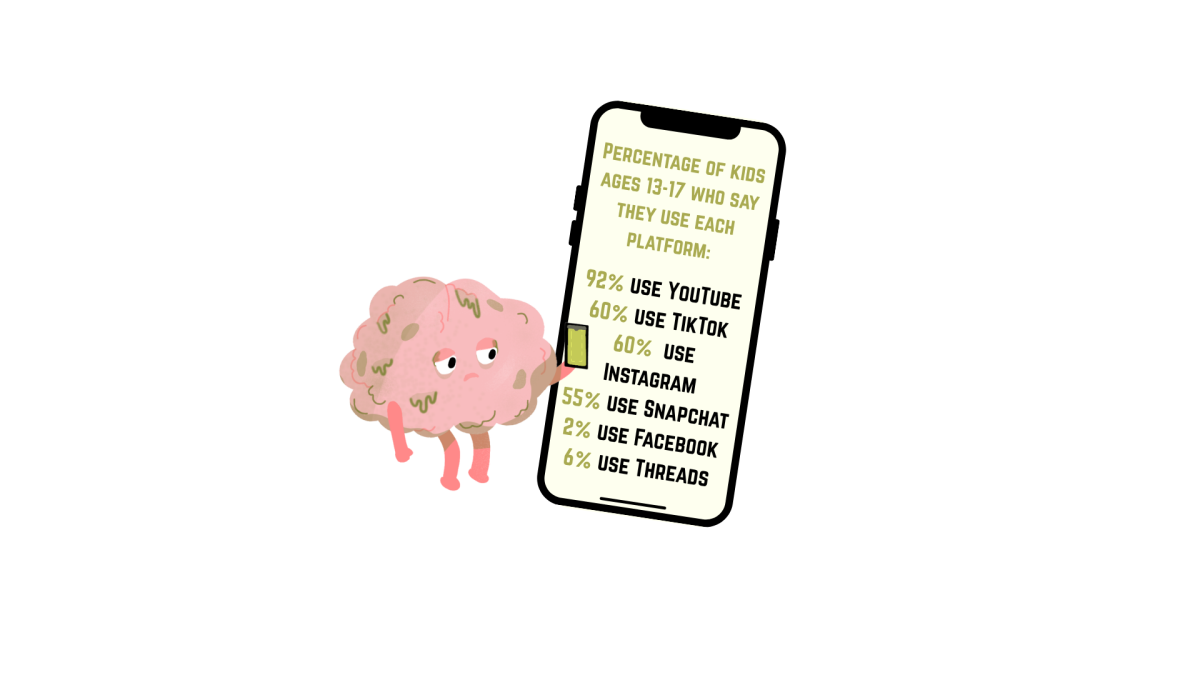
“People definitely find role models from an expression standpoint, especially on Instagram and TikTok,” Pitone said. “People tend to follow what they see on social media, and they’ll be influenced by people who are influenced.”
With that constant flow of influence, social media also allows trends to spread more quickly than ever before.
“It’s easier to set a trend now,” Nowlin said. “The baggy stuff didn’t really start coming in until two to three years ago. Once everybody likes that trend, everybody’s going to hop on the trend.”
Trends may rise and fall between months, but the deeper shift lies in the cultural impact they leave behind. What was once considered unconventional or even unacceptable in men’s fashion is now becoming mainstream, illustrating a broader change in how masculinity itself is defined.
With growing acceptance, fashion becomes not just what is worn, but how identity is expressed. For many, that expression is not random, but deliberate, shaped by the role they see themselves playing in a given moment.
“Fashion is like theater,” Joseph said. “Every role has its own look. It depends on the role that I want to play for that day; that’s the look I want to have. If a certain scene doesn’t match that look they’re wearing (in theater), it makes you feel out of place. That’s what fashion does. You tend to vibe with the environment by keeping up.”