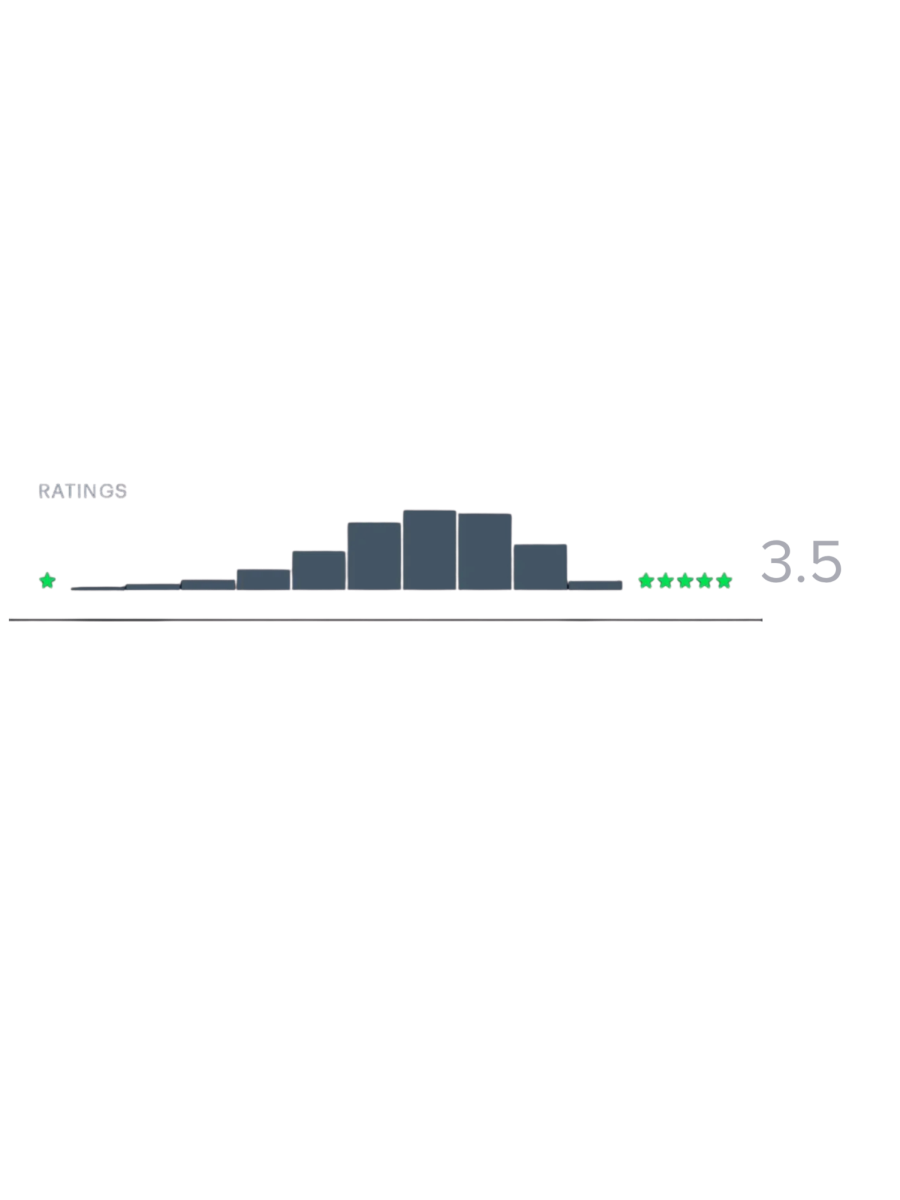
In “The Drama” (2026), everything shifts in a moment that feels almost too casual to matter. Directed by Kristoffer Borgli, the film presents itself as a romantic drama but quickly reveals something darker. It is less about love and more about what happens when love is forced to confront a version it cannot hold comfortably. Though the film has an audience score of 78% on Rotten Tomatoes, I felt that it fell flat in developing the plot, making it unable to support the rather heavy-handed symbolism.
Set in a Boston suburb, the film follows Emma (Zendaya) and Charlie (Robert Pattinson), a couple approaching their wedding day. Their relationship begins with an awkward but somewhat endearing meet-cute, one that already plays with miscommunication as Emma reveals she is deaf in one ear. This detail felt insignificant at first, but it shapes how the plot handles understanding, or a lack thereof.
The central conflict arises during a late-night conversation with friends, when the couple and their friends Rachel (Alana Haim) and Mike (Mamoudou Athie) share the worst thing they have ever done. The tone is casual until Emma’s turn, and what she reveals reframes everything. The confession lands heavily, not because of the action, but because of the possibility. The film becomes fixated on that “almost,” treating it as something that still exists alongside who Emma is now.
From there, the relationship begins to unravel in awkward, often uncomfortable ways. Charlie’s reaction drives much of the tension. He starts to question not just Emma’s past, but his entire understanding of her. His fear is not grounded in evidence as much as imagination, which the film visualizes through repeated, sometimes heavy-handed imagery of a younger Emma with a weapon.
Zendaya’s performance works against that villanization, playing Emma with a refusal to turn her into a victim or villain. Her character explains her past, her growth, and mentions her activism, but the film does not fully explore that transformation. Instead, it keeps returning to the shock value of the confession, limiting how much we are allowed to see beyond it.
The film’s structure suggests depth without fully providing it. Flashbacks appear briefly, offering glimpses of Emma’s teenage years, but they feel underdeveloped compared to the weight they are meant to carry. A younger version of Emma appears throughout the film as a physical presence, representing anxiety and persistence of past selves. While it was one of the more interesting ideas, the film failed to portray it to its full potential
Where the film is most effective, though, is in its use of sound. Silence interrupts conversations at key moments, placing the audience within Emma’s partial hearing and destabilizing any sense of certainty. The soundtrack deepens this contrast with music produced by Daniel Pemberton, creating scores for Project Hail Mary and both Spider-Verse movies. Early scenes are scored by softer, nostalgic music that frames the relationship as grounded and familiar. As tension builds, that coherence dissolves into chaotic EDM, mirroring the disorientation of the relationship.
Despite these strengths, the film feels limited in its emotional scope. Emma and Charlie’s relationship is central, yet it never feels fully lived-in. For a couple about to get married, they seem to know surprisingly little about each other. This absence becomes more noticeable as the film progresses further into its central question: whether mistakes can truly be forgiven.
“The Drama” is engaging and at times truly unsettling, but it simplifies the very complexity it sets out to examine. It raises questions about identity, forgiveness and whether people can truly change, but it stops short of fully exploring them.
Three and a half stars.