February marks the point where many quietly abandon their New Year’s goals after just making them a month earlier. Traditional goal-setting methods, such as bucket lists and vision boards, lose their meaning. However, Gen Z has invented a new approach: the “a winter arc,” a popular social media trend where people focus on self-improvement during the winter time.
Academic Arc
“A winter arc is a period where you can sit down and kind of just improve yourself in any aspects,” senior Victor Fang said.
For Fang, this means spending hours at the Rollins library on the weekends, phone notifications on silent, working on his college applications and his homework.
“I’d rather be working on homework or college applications than going out on a Friday or doing too much when I don’t have the time, and I think that’s going to pay off in the future,” Fang said. “Even if it doesn’t pay off immediately or I don’t get the results that I want, I think long term, these habits are gonna build and I’m gonna have better opportunities in the future because of the habits I built.”
Especially in the depressing season of winter, goals often feel unachievable. Not because they are too hard to accomplish, but because people aren’t consistent. Fang emphasizes the importance of small, consistent efforts when beginning a winter arc.
“Do 1% extra every day,” Fang said. “For example, doing five more minutes of homework or doing an extra problem on your homework set, I think it definitely pays off a lot because every time you add that 1%, eventually it’s going to become 100% and you’re going to thank yourself for those tiny steps that don’t seem like a lot.”
Exercise Arc
Junior Thomas Hoskins approaches the gym with intention. Although winter arcs are only temporary, he aims in building long term strength.
“My main goal is to be really strong long term and just be the healthiest version of myself,” Hoskins said. “I think of it as more of a three hundred sixty-five day arc.”
Hoskins keeps himself accountable by tracking his progress in and out of the gym.
“At the gym, I can measure my progress by my weight increasing on the bench, squat and all the exercises,” Hoskins said. “Also, by tracking my calories. If I get enough calories every day, that’s a success.”
For Hoskins, motivation goes deeper than just physical results.
“Find a purpose that you’re doing it for,” Hoskins said. “I think if you are very superficial about it, like if you just want to become stronger, you probably won’t stay consistent. But if you have a deeper why, then you’ll stick with it.
Mental Health Arc (& 100 pushups)
Sophomore Cassidy Driscoll struggled with her mental health in the past and wasn’t able to open up to people about it. Now, in her winter arc, she recognizes that her silence was something holding her back and wants to transform her habits.
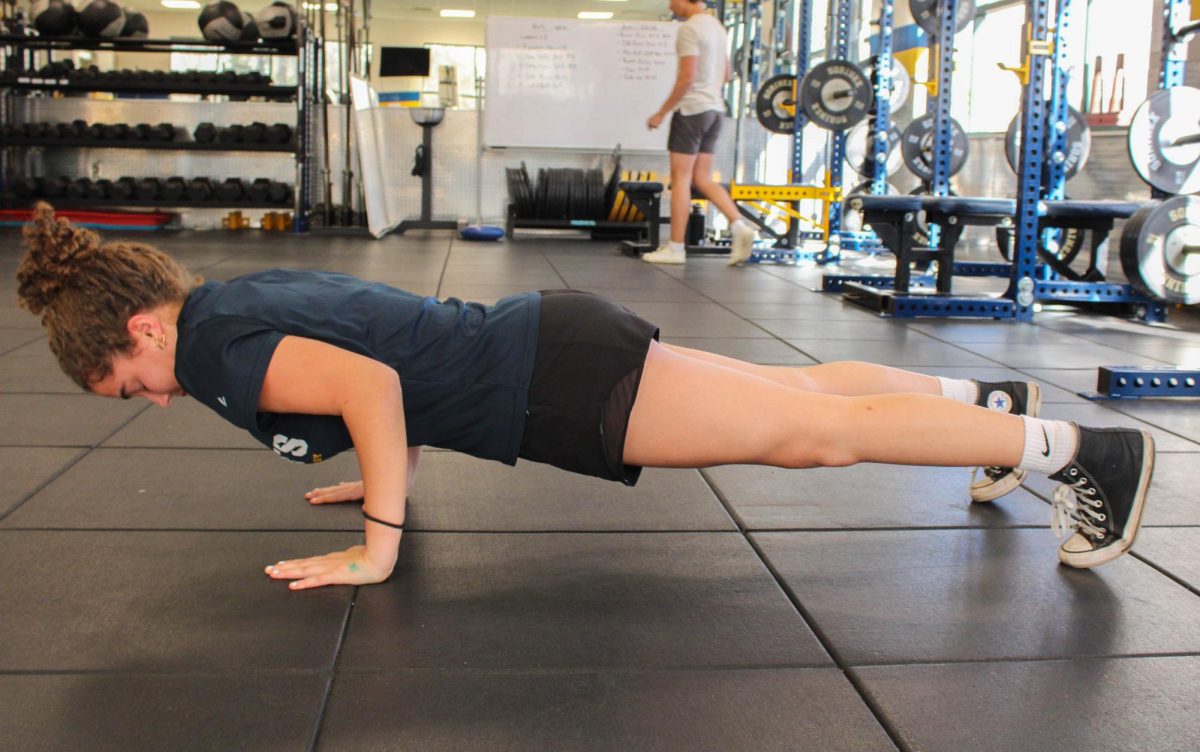
“I need to start talking openly about my mental health now because it will help me in the future … ,” Driscoll said. “It brought me out of the dark place I was in. It helped me have more confidence within myself, be willing to learn about myself, grow and just become a better person.” Driscoll is also focusing on what she calls her “pushup journey.” She starts by doing five pushups and increases the number each week until she reaches one-hundred. Doing pushups has helped Driscoll with boosting her self-confidence.
“I started my winter arc because it is around the new year,” Driscoll said. “If we actually want to follow through with our goals, we need to get a headstart on things. Before, I was not be able to do a single push up, but now that I’m on that grind, I can do a lot more than what an average person can do.”
Although it is already February, Driscoll believes that it is never too late to start a winter arc. It is more about the decision to begin.
“Starting is the hardest part, but it only gets easier from there,” Driscoll said. “I’m a person who used to love excuses. I would say that I will start in a week. Those excuses won’t help you in having good discipline. It is what sets you up for the future, and it’s what helps you become a better person with this discipline because it teaches you life skills that you need for years beyond.”