On March 25, Meta and Google lost a landmark lawsuit. They had to pay $6 million in damages for the endangerment of children and teens’ mental health on their various platforms. The judge determined that Instagram and YouTube were intentionally addictive and failed to protect young people from anxiety, depression and low self-esteem.
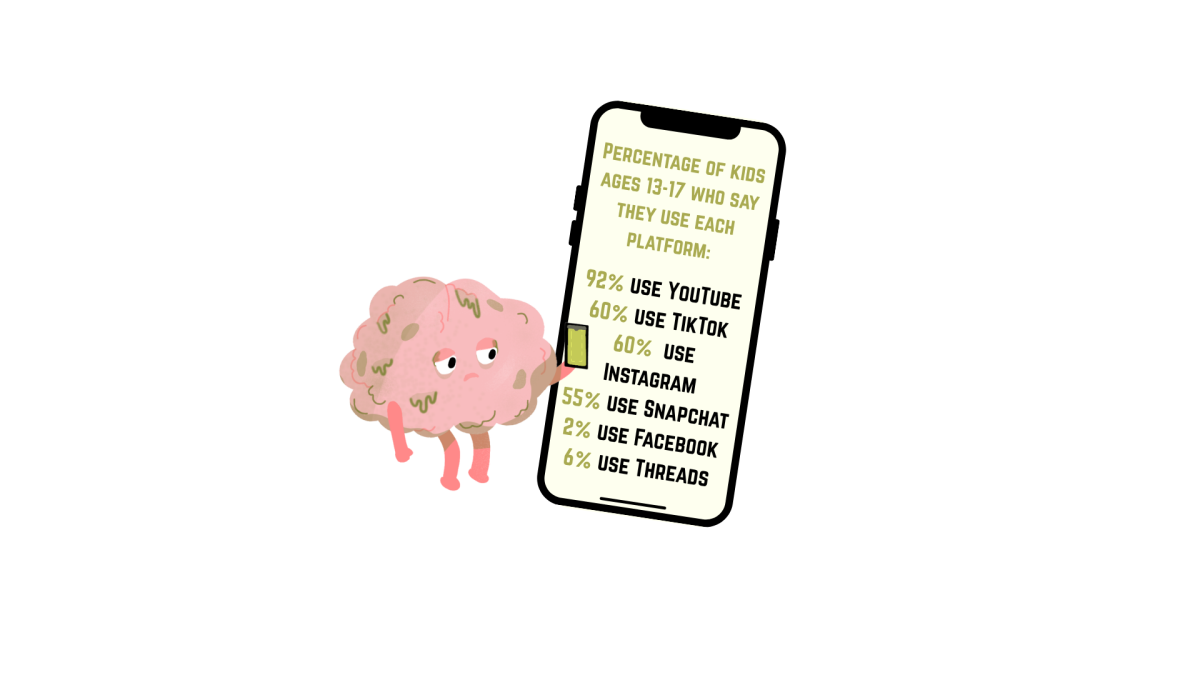
Ninety-five percent of teens are using social media nationally. This statistic extends to the Trinity Prep campus and its students. The most harmful parts of these apps come from the infinite scroll feature of short-form content.
Social media addiction starts with the release of the chemical dopamine, which is central to the brain’s reward system that regulates pleasure, motivation, and memory
“Scrolling sometimes tricks us into believing we’re part of that community (of viewers),” psychology teacher Michael Brown said. “Community is something that your brain really wants you to get into because we’re pack animals. And once that dopamine train starts rolling, it makes you want more of it.”
Addiction is also the result of massive amounts of stimulus from short-form videos that easily catch the attention of young people.
“If I’m just scrolling and there’s bright lights, sounds, flashing images, our brains respond really rapidly to a ton of that really quick stimuli,” Brown said. “We tend to crave it in a lot of ways. Even when we’re not enjoying it… it’s removing the pain of boredom.”
Stimulation has caused many students’ attention spans to lessen. According to a study done by Santa Maria College, attention span has dropped from two and a half minutes to 47 seconds in a span of 20 years.
“(Social media) definitely killed our attention spans,” senior Owen Raffa said. “Everyone’s so used to the short-form media of 10-second-long videos, and then you scroll and scroll and scroll.”
Over her 33 years of teaching, English teacher Ann Skippers has also seen this reduction in attention. To adapt to the change, she has altered the way she teaches to better engage students.
“One of the things that I do is I break my lessons up,” Skippers said. “Either if it’s reading, then talking or doing something, then getting up, but something that makes it into smaller chunks so that students can stay a little more focused.”
During her time teaching, Skippers has seen new technologies for new social media apps come out. While this was happening, she saw firsthand how students have been affected by them.
“Less depth of study has occurred because of it,” Skippers said. “(Students) have so many outlets that it’s almost like they’re frozen in how they’re going to (make decisions), choice paralysis.”
Instead of social media harming students, many feel it has helped them. Some believe social media gives them a break from the typical high stress of a school day.
“I think it’s super important to give yourself a little break every now and then when you’re doing work, just so you don’t get burned out, whether that’s social media or reading a book,” Raffa said.
Some students use social media to interact with friends better and as a way of communicating.
“I have a group chat with my friends, and I keep sending them videos,” eighth grader Laura Barbosa said. “I usually send them videos to make them laugh.”
While students use social media for a few positive effects, addiction is extremely common among them. According to the National Library of Medicine, over one-third of kids who use social media have said that they use it extremely frequently.
“(Social media) distracts me during schoolwork and homework time, and it’s just kind of become something that’s not like a ‘Oh, let me get on it,’” eighth grader Hayden Rooks said. “It (has) kind of become a lifestyle at this point.”
The addiction to social media, or the addiction to anything, is hard to break. However, when you do get hooked on social media platforms, there are still ways to help yourself.
“Involve other people in your struggle,” Brown said. “The more we hide those things, the more they tend to perpetuate. If you put yourself vulnerably out in the open, it’s an awesome first step to curing it.”