Somewhere between packed schedules and constant notifications, time has begun to feel compressed. Weeks disappear into deadlines, months dissolve into notifications, and entire seasons fade into a blur of glowing screens and unfinished thoughts. We live in an age of optimization and automation, yet we still find ourselves struggling to breathe.
When we were younger, a combination of high neuroplasticity (brain flexibility that allows rapid formation of new, strong synaptic pathways), active and developing brain structures and an active hippocampus (the memory-making part of the brain) gave us the ability to remember vividly. Every experience was a new one.
But as we age, it becomes harder to gain new experiences. This is partly because the more feelings and encounters we experience, the less there is to experience. But part of it is because, as human nature coincides with age, we can become increasingly stuck in old habits, overly comfortable with the familiar, and unwilling to pursue novelty.
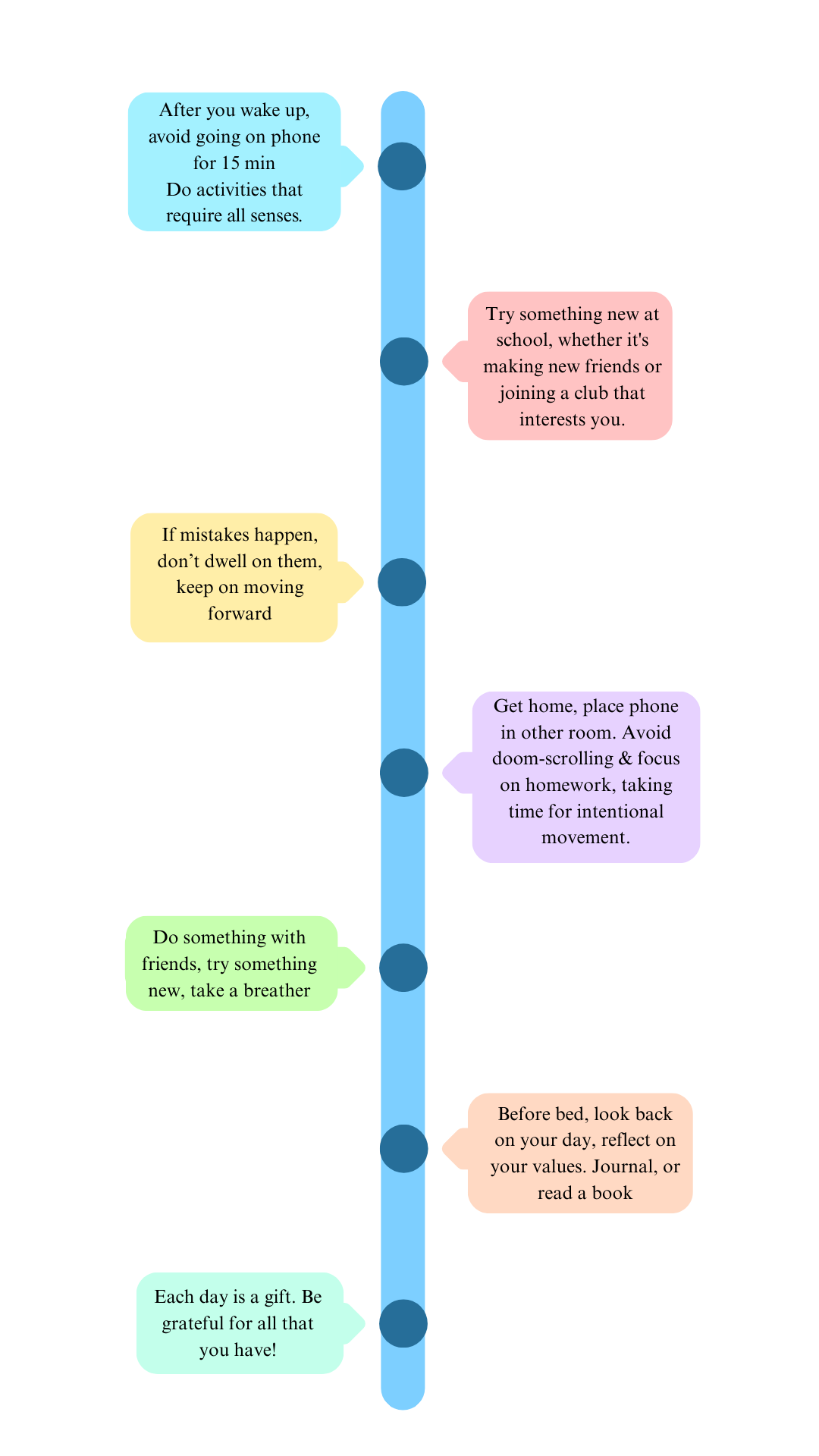
While our brains have moved beyond such drastic development, there are still ways of escaping the mundane cycle. The foremost and easiest place for change lies in the first 15 minutes of waking up, when we are in a critical, yet malleable, state called theta. During theta, the brain is at its most vulnerable, and what we do imprints on the brain for the rest of the day. According to a 2026 report by Blue Cross Blue Shield of Michigan, 70% to 80% of people check their phone within 10 minutes of waking, a habit that disrupts cognitive function, weakens mental health and hinders immune strength.
Dr. Ava Dreyer is a licensed psychotherapist who founded Neuroscience Intelligence Coaching and developed neuroscience-based programs taught at Yale University’s School of Medicine.
“Waking up in the morning (is) … really like being born again into the world,” Dreyer said. “By looking at that light and the content … you force your brain to forget about theta state … (so now it) takes four to six hours for your brain’s cortisol level to mellow out.”
In addition to overstimulating the brain and spiking cortisol, scrolling sets many people’s days off on the wrong foot by teaching the brain a routine of dullness, which also feeds into the perception that time truly is speeding up.
“What are you doing for the next four to six hours?” Dreyer said. “You’re asking your brain to learn and to perform … in a stressed state, which means it’s starting to shut down areas of your brain that aren’t needed for you to stay alive.”
The implications of screentime in the morning are far-reaching, but the effects of scrolling through short-form content at any point in the day are just as troubling. Research from the National Institutes of Health signals a global concern, with over 1 billion people spending an average of three hours scrolling per day.
“I work with top, top global law firms, and I have lawyers coming into me saying, ‘Oh my God, I can’t stop scrolling, I can’t stop scrolling,’ because … they find (it) as a stress-relieving (mechanism) to escape into the scroll, unfortunately, that backfires,” Dreyer said. “What it does is it gives you this little dopamine hit. Dopamine is your motivational energy. Unfortunately, your brain learns to need that addiction, and you start being addicted to that quick fix from a dopamine hit.”
Yet the consequences extend beyond mental fatigue. They chip away at something even more valuable than focus.
“Time is … the most important thing that (you) lose,” senior Orian Ratanasirintrawoot said. “Once this moment is gone, it’s gone forever. And that’s something when you’re doom scrolling, I’m a victim of it to. … I’ll spend 15 minutes, (and) I’m like, whoa, that felt like five. … And those are 15 minutes I’ll never get back in my life.”
Night or day, the stream of notifications and social-feed-refreshes never pauses, not only reinforcing the dopamine addiction cycle, but also instilling a subconscious need to be on constant alert or get left behind. This creates a perceived threat to the brain, where after 14 days, the mind and body become induced into a state of chronic stress, making it the leading cause of injuries and illnesses than any other condition.
Acting as a causal pathway to nervous system dysregulation, chronic stress accelerates burnout and results in sustained emotional exhaustion.
“Emotional numbness is a symptom of burnout,” Dreyer said. “Burnout … is very much stress-related, but … is often an experience … especially … teenagers (have), because they haven’t taken care of their nervous system. And it doesn’t mean that what they’re dealing with is too hard or too much for them. … It’s an absence of nervous system regulation.”
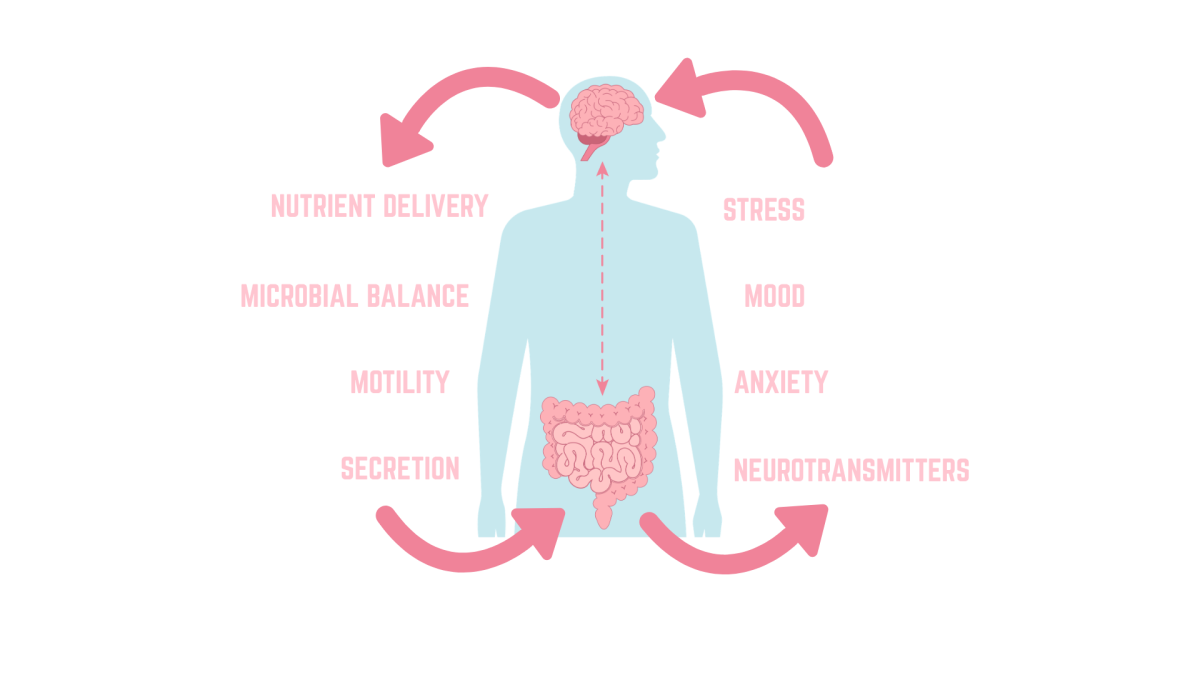
By feeding stressful images to the mind through scrolling, the vagus nerve becomes disrupted. This nerve transmits cortisol to all major organs. This creates a positive feedback loop in which the brain remains in a stressed state, driving the person to seek another quick dopamine hit through more scrolling, which further elevates cortisol and deepens nervous-system imbalance, reinforcing the cycle.
It is not only what we do during breaks that shapes the mind and body. Constantly shifting between tasks, a pattern common among students and adults, weakens the neural pathways needed for deep focus, increases stress, impairs memory and reduces cognitive flexibility. Although task switching is often unavoidable, recognizing and aligning your work with your ultradian rhythm can help offset its effects.
“The ultradian rhythm is your power hours,” Dreyer said. “Every human brain is designed to focus cognitively for a maximum of two hours … before cortisol … creates so many dead cells in your brain that it starts to clog the neuropathways. … The thing that helps you is to do 2 minutes of intentional movement to flush out that cortisol buildup. … It’s not moving because you have to go get a drink of water, go to the restroom or walk your dog. It’s moving just for the sake of brain care.”
Pressure has permeated nearly every dimension of daily life. Whether striving to excel in academics, athletics or work, maintaining a sense of presence while managing constant demands has become increasingly difficult. The expectation to continuously perform leaves little room to pause, creating a rhythm of motion without reflection.
“I feel like I’m working every day,” sophomore Sidarth Pothuraju said. “And when I look back, it (doesn’t) even (feel like) that much. Even though I’m working, it just doesn’t feel like a long time. Every week goes by fast, but it feels very long. … I feel like I’m constantly doing stuff. I (do) not have time to think back and reflect. I’m just constantly moving.”
Despite this, no matter how stressful your day becomes, it is still important to remember where you are on your path.
“The textbook definition (of being present) is being aware of what’s happening in the current moment,” Ratan said. “To me, it’s not overthinking … the future. Being aware of the future is important, but not overthinking it. Enjoying where you are at this very second, because the journey is what we look back on. … so you might as well live in (it).”
Novel experiences break cycles of monotony by stimulating neurogenesis, the growth of new brain cells essential for cognitive vitality. Beyond that, they disrupt habitual patterns. The brain naturally seeks patterns to interpret the world, reduce stress and anticipate what comes next. Yet this tendency can also trap us in familiar routines and rigid thinking.
Novel experiences do not have to be elaborate. Anything that breaks your routine, challenges your thinking or pushes you beyond your comfort zone is enough.
“I think it’s kind of inevitable for the days to feel the same,” Ratan said. “You’re going to the same classes, you’re doing the same type of work, but… even when the days feel the same, you can still have a distinct moment in that day that differentiates it.”
When our brains become all too accustomed to routines and modern culture accelerates, it is important to pause and reflect on what you truly value and what kind of person you want to be.
“Understanding your values (and) what you value about yourself is going to change over time,” Dreyer said. “But the greatest cause of anxiety is when we make choices that don’t align with what we truly value … (so) figure out what (those) core … values, beliefs, personality traits and skills (are). … Then think about … what it looks like for (you) to stand in those core powers, to come from those traits that (you) trust about (yourself) so well. … With that, (you will) tend to discover how (you’re) going to make the most meaning out of each day.”
Still, clarity about what you value means little if it does not influence how you experience each day. Living with intention requires more than reflection. It calls for presence in the routines that shape everyday life.
“Turn off the autopilot and give yourself something to look forward to every day,” Ratan said. “Do things that genuinely make you happy … take some silence, know that everything is gonna be okay no matter what. This is your life … things are gonna go wrong (so) you gotta be prepared for that and (not) dwell on it. … You’re only in high school once. … Enjoy it as much as you can, even though some days are going to be inevitably really difficult or really stressful.”