Uncle Sam established the image of an American as someone hardworking, patriotic and successful, until that person isn’t white. If they have darker skin and act or dress like the image Uncle Sam created, they’re often labeled “whitewashed.” Such a term implies defining someone as being influenced by western culture, yet it only applies to people who aren’t white. Their ability to fit in is what makes them stand out.
Neither of my parents were born and raised in America; I was. I have lived in three different states: New York, Connecticut
and Florida, and I have learned and embraced different parts of American culture. I celebrate the Fourth of July by eating hot dogs and watching fireworks. I eat turkey on Thanksgiving with my family. I do all these things because I live in America, but the color of my skin is brown, so I am often called “whitewashed.” But what they do not know is that both my parents are British, and we often eat a traditional Sunday roast. There is a presumption that because of my skin color, I am unable to participate in such activities and should participate in activities of my presumed culture.
Over the years, I have grown to become closely connected with American culture, yet for minorities who were born and grew up in America, how are they supposed to avoid being called “whitewashed?” The truth is, they likely won’t. No matter how anyone acts, dresses or speaks, they are expected to embody their
ethnic culture.
Almost every day, children around the country have to stand with their hands over their hearts and pledge allegiance to the flag of the United States of America. In the late 1800s, the pledge was created for newly arriving immigrant children to understand
the model of American culture.
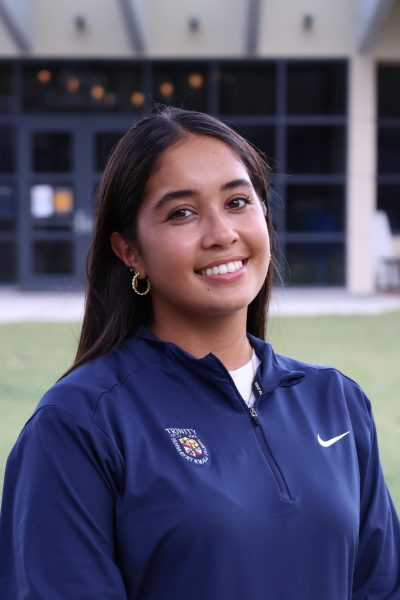
Although senior Reha Nadga was born and grew up in Winter Park, she still gets stereotyped because of her Indian roots rather than being seen as an American, and has been called “whitewashed.”
“It’s brown on the outside, but then at the end of the day, all the things I’m involved in and my personality have leaned more into my American side, I think that’s why that term comes up a lot,” Nagda said.
For those who do come from different cultural backgrounds, they nevertheless strive to do the best they can to fit in. According
to a study done by Psychology Today, we constantly use the decisions of others around us to navigate the choices we make throughout our daily lives. Because of this feeling of belonging, we desire to be more American through adopting American trends and traditions.
“I had just been exposed equally to the American side of things, especially growing up in Winter Park, where the majority of the people are white,” Nagda said. “It just felt natural for me to fall into cheerleading and country music just because it was what I was around all the time, and it’s what my parents also showed us.”
Regardless of whether you are born here or not, whenever people attempt to celebrate other aspects of their identities, they are faced with other challenges, such as online hate and discrimination.
“It’s weird because (Indian) culture is hated on a lot,” senior Diya Suri said. “So when I don’t celebrate it, somehow I get called ‘whitewashed’ for not embracing my own culture, which is made fun of a lot. It’s weird to turn around and make fun of me for not embracing it (and) embracing something else.”
No one can define the perfect balance between cultures that makes someone not “whitewashed.” The balance between one’s
American identity and any other identity they have is their own business. It should never be necessary to prove to others who you are.
“I don’t feel like I need to show my culture,” Suri said. “The things I like that they considered me liking to be ‘whitewashed,’ I’m
not going to stop liking those things. So I just learned to embrace both sides.”
It takes time and courage to be able to talk about the various aspects of your own culture and what you, as an individual, celebrate, which is often exacerbated by online hate. According to the United Nations, 70% or more of hate crimes and hate speech on social media are targeted toward national, ethnic, religious or linguistic minorities.
One step towards embracing all aspects of one’s culture is to find friends who accept and celebrate these unique experiences.
“Now I bring it up a lot more than I did before,” Suri said. “I was more embarrassed. But the color wars that happened are the same thing that we do when we celebrate Holi. And I brought that up, and I was talking about that and my experiences. So I definitely bring it up a lot more now.”
It makes it hard to casually bring culture into a conversation with other people because sometimes it’s hard to explain, or because you get worried that if you bring it up, people will judge you.
Suri has been able to look past the comment and reflect on how she has grown with embracing her own culture.
“Once I realized that no one’s going to stop stereotyping you, and they’re going to say whatever they want about your culture,” Suri said. “What you do with it and what you don’t do with it. I think not caring what other people think about it and just doing what you
want (with your culture).”
Regardless of the way people look, no one should think that they have the right to judge others on how they act, dress or talk.