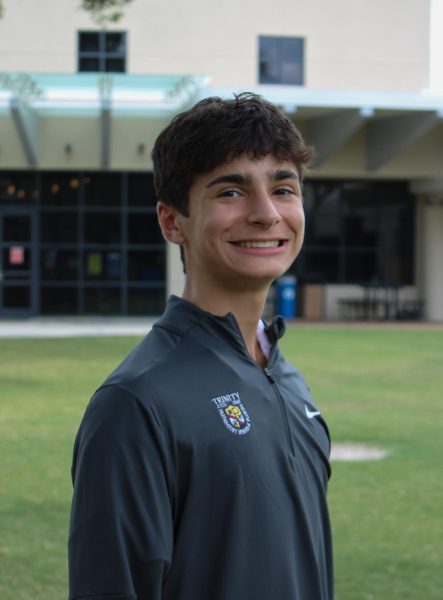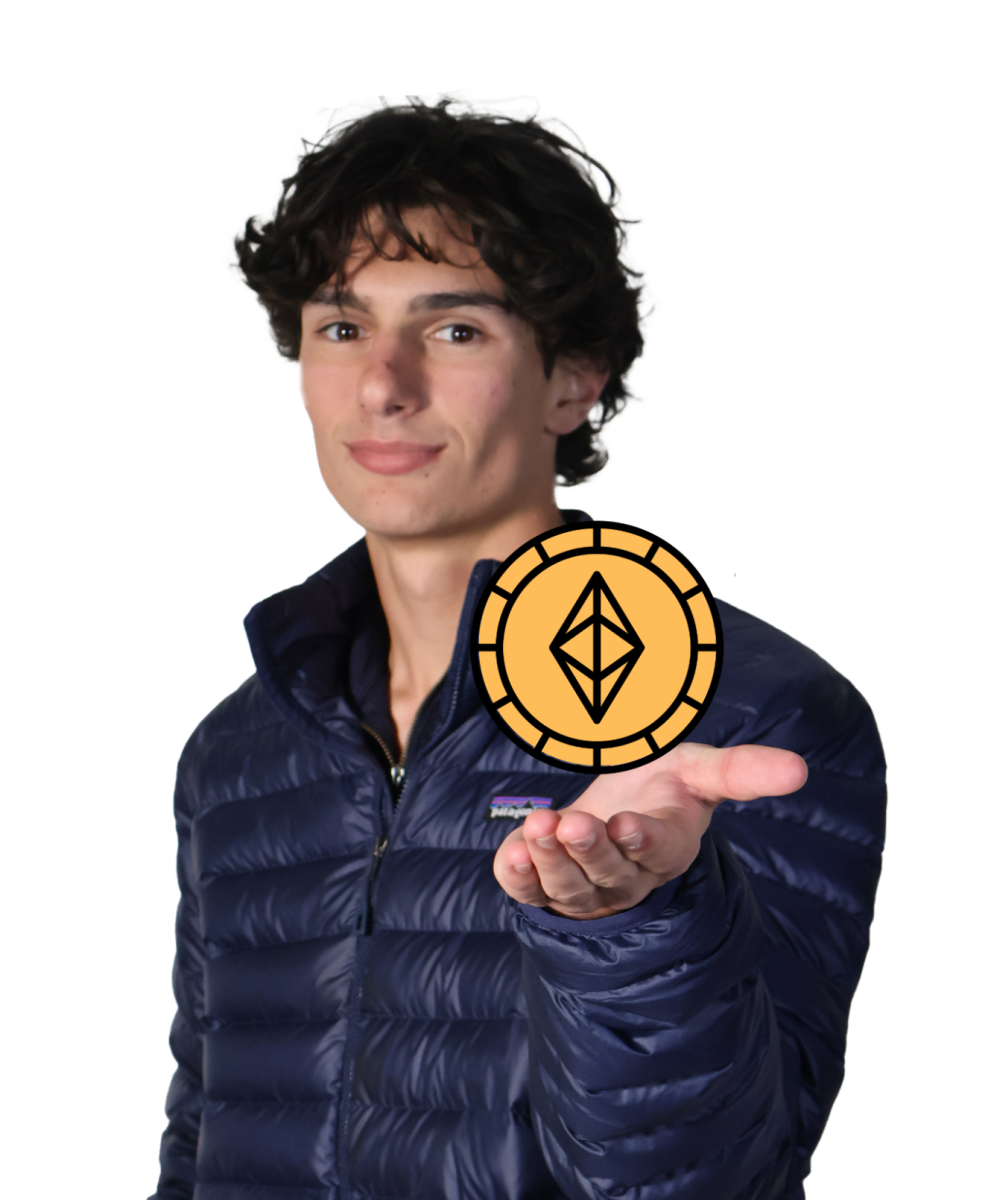
When senior Connor Brady first invested in Ethereum, the cryptocurrency was valued at about $700. Five years later, a single coin is worth nearly four times that amount. Since its creation in 2008, the cryptocurrency market has expanded rapidly, driven largely by advances in blockchain technology. These developments have captured the attention of Trinity students across a range of grade levels, raising questions about how cryptocurrencies operate and what differentiates them from traditional financial systems.
Cryptocurrencies are unique in that they are decentralized, operating without government oversight or a central bank, yet they can still be traded and used in daily commerce. Blockchain works by recording transactions in verified “blocks” that are added to a shared public chain and validated by a decentralized network, making the information extremely difficult to alter and creating a secure, transparent record that has enabled widespread trust and adoption of cryptocurrencies like Bitcoin and Ethereum.
Class of 2021 alumnus Jake Raffa served as Head of Partnerships for Vanderbilt University’s blockchain organization and now works as a financial technology consultant.
“One of the most exciting things about cryptocurrencies and blockchain is just how new the space is,” Raffa said. “We really don’t know the limits that we can push blockchain technology to. There’s really a lot of room for exponential growth … and a big opportunity to make a huge impact on people.”
This excitement resonated with Brady and his friends as early as 7th grade, prompting them to explore and research the market.
Exposure to higher-level courses only intensified Brady’s interest as he progressed through high school.
“I really started picking (crypto) up again when I got a lot into applied math and computer science,” Brady said. “(Although cryptocurrencies) are more about public sentiment than anything, just trying to predict where something is going to go interests me a lot, and I got into it as I took more math classes and tried new things.”
The role public sentiment plays in dictating cryptocurrency market value distinguishes it from fiat currencies, where value is derived from trust in the issuing government’s economic stability, like the U.S. dollar.
“The (crypto) market is a lot more interesting than it’s ever been, with how many ways it can be manipulated and what it’s driven by,” Brady said. “The recent volatility, with artificial intelligence, along with how easily a tweet from someone of political power can throw the market off so much, has definitely piqued a lot of interest.”
This distinction has become a magnet for investors like Brady and, coupled with blockchain innovations, has opened new avenues for investing in traditional stocks. This is through tokenized stocks, which use crypto technology and the benefits of blockchain to invest in 1:1-backed real-world assets like Apple or Nvidia.
“I’ve been using crypto to invest in stocks nowadays,” Brady said. “There’s been a lot of hype around blockchains recently. I think both definitely have been trending upwards. Kids don’t talk as much about crypto, but it’s definitely been on people’s minds a lot more now because of new technology and how much easier it’s been to access it and understand it.”
Crucially, promises from President Trump, such as making the United States “the crypto capital of the world,” signal a positive outlook for the space’s direction and leave the door open to major growth. This vision has already been realized by the signing of executive orders to strengthen digital asset leadership, the creation of the Strategic Bitcoin Reserve and the repeal of restrictive banking regulations.
“We’re going to continue to see (crypto) expand, especially as we see how U.S. legislation works out,” Raffa said. “I do think that has the potential to change the space … but assuming it follows the path it’s been following, we’ll only see adoption of crypto and blockchain technology continue to increase.”
As a result, cryptocurrency and blockchain will become increasingly integrated into day-to-day transactions, making it all the more important to grasp the basic concepts of these digital assets.
“(You) don’t need to understand it from a technical perspective,” Raffa said. “(But at least (acknowledging) that Bitcoin and Ethereum are these legit things … (with) major financial companies … building out their infrastructure with blockchain technology. Literacy is important, but it’s also important to recognize that this is something that’s here to stay, (so) at least strive to make an effort to understand it.”
This is especially true in a fast-moving market, where the door is always open to risks such as rug pulling. Common in trend-based memecoins like the Squid Game Token, rug pulls occur when developers hype a new project to attract investment, only to suddenly abandon it and steal the funds.
“A lot of newer cryptocurrencies aren’t based on anything, just hype and excitement, which can be a really cool thing if you want to try to move fast and make a lot of money quickly, but it can also be the opposite,” Brady said.
While the prospect of a government-independent currency may seem attractive, the lack of regulation leaves investors’ fates in the hands of the founder, who may have ulterior motives.
“There’s no governmental basis that is focused on trying to improve the economy and regulate it,” Brady said. “So it is completely dependent on what the creator wants to do with this coin, if (the creator) just wants to make money or (if they) actually want to make it a sustainable cryptocurrency.”
Managing the Trinity work-life balance does not make it any easier to verify the credibility of cryptocurrencies or stay on top of the latest market movements.
“It’s about how much time you can put into it,” Brady said. “I’m a student, so I have a lot of work and don’t have a lot of time to put into constantly monitoring the market … It’s just all about how much time you can put into validating and finding concrete reasons why you believe (certain cryptocurrencies) aren’t a complete scam.”
While the Trinity workload is demanding, signing up for daily crypto newsletters or exploring beginner-friendly programming courses like CryptoZombies can allow students to stay ahead and alleviate pressure.
In addition, utilizing Trinity’s vast array of applied science and engineering courses can also help students develop the technical skills needed to navigate and compete in an increasingly automated industry.
“When you think about big industries trading cryptocurrency … It’s all done by pre-programmed strategies and algorithms,” Brady said. “So (in) talking about tools for the future that I think will be instrumental, it will be computer science. And then trying to make things that are automatically going to beat the market instead of by hand.”
Using social media discussion forums like Reddit, X or Discord can be a great way to make more informed investment decisions that align closer with public opinion.
“Getting a large majority of people’s sentiment … can hold a lot more weight than just asking Google or AI because of how much people’s belief in a cryptocurrency is going to affect its price,” Brady said.
Still, the threat of rug pulls and unpredictable collapses always looms, underscoring the importance of conducting thorough research or prioritizing safety by investing in well-known currencies.
“Look at the founders and transact using big-name tokens for the most part,” said junior Thomas Hoskins, who has been involved in crypto for almost four years. “You can always try to transact with some of the riskier tokens, but of course, there’s the risk involved with that. There’s no real way to know, because a project can still look really valid, and then they can rug pull.”
The illegal misuse of billions of dollars of customer funds in the Sam Bankman-Fried FTX cryptocurrency scandal serves as a stark reminder that distinguishing between good and bad actors is both necessary but tricky. Despite the risks, the cryptocurrency sector is likely to continue to grow and evolve, driven by ongoing innovation from developers and continued interest from investors.
“The people who stay and continue … to learn and be present past big spikes and during market downturns … are really building unique projects that will actually impact the space,” Raffa said. “That quick cash grab aspect is a lot of reasons why some of the space isn’t seen as legitimate by some, but I think there are a lot of incredibly important projects being built that are genuinely making an impact.”
In lieu of unprecedented innovation in blockchain technology, favorable legislative policies and an increasingly integrated crypto sector, now is a critical time to analyze the market, break it down and embrace the future of finance.
“Just consume as much information as you can, watch as many videos as you can and then dive right into it,” Brady said. “There’s no experience that you’re going to get without actually buying and trading it. … Even just using 10 or 15 dollars and trading 10 cents at a time, you’re still going to get the experience of trading cryptocurrency. … Just jump right in, start experiencing it and learn as you go.”